
 EN
EN
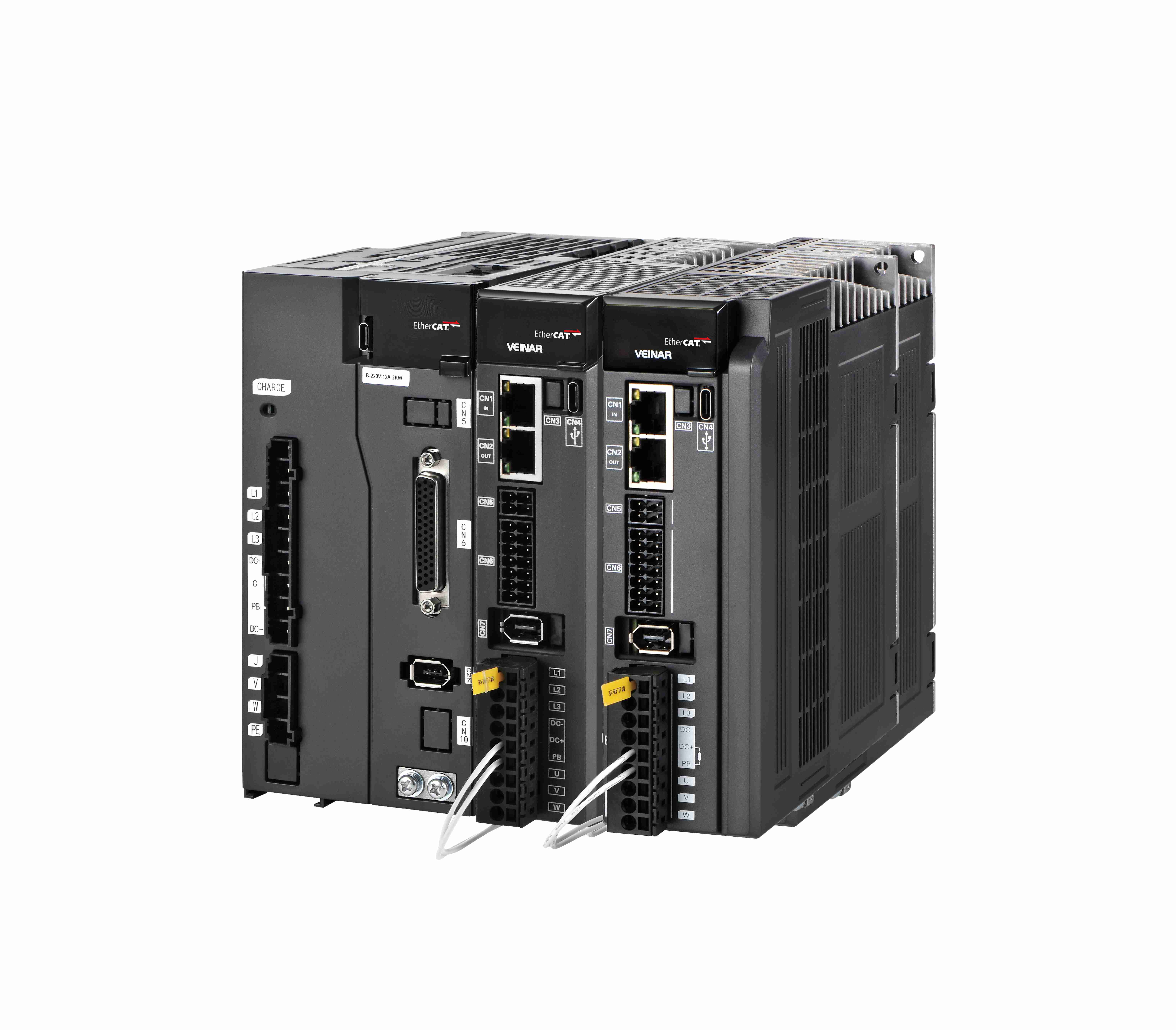
The Core Role of Largepower EtherCAT Servo in Tool Magazine Reliability Reconstruction
In modern industrial production, tool magazines are critical components for automated machining equipment, especially in high-load scenarios like automotive mold manufacturing. These tool magazines need to handle frequent tool changes, bear large loads, and maintain long-term stable operation—requirements that pose significant challenges to traditional control systems. Traditional tool magazine control relies heavily on relay logic, which involves complex wiring, numerous connection points, and high vulnerability to failures. Against this backdrop, the largepower ethercat servo has emerged as a game-changing solution, combining robust power output with bus-based logic control to reconstruct the reliability of tool magazines.
The largepower ethercat servo is uniquely suited for high-demand industrial environments, as it delivers the substantial power needed for heavy-duty tool magazine operations while ensuring precise control. Unlike standard servo systems that may struggle with the load and frequency requirements of large tool magazines, this high-power variant maintains stable performance even during prolonged, high-intensity use. Its integration with bus-based logic control addresses the core pain points of traditional relay-based systems: excessive fault points and poor maintainability. By merging powerful driving capabilities with intelligent bus control, the largepower ethercat servo provides a comprehensive reliability solution for tool magazines, enabling them to meet the rigorous demands of continuous production in industries like automotive manufacturing, heavy machinery, and precision mold processing.
For manufacturers, the value of this combination is clear: a tool magazine that operates reliably under heavy loads reduces unplanned downtime and ensures consistent production flow. The largepower ethercat servo’s ability to handle high torque and maintain precision during rapid tool changes makes it an indispensable component for modern automated production lines, where efficiency and reliability are directly tied to profitability.
Simplified Structure and Reduced Fault Points via Bus Logic Control
One of the most significant advantages of integrating the largepower ethercat servo with bus-based logic control is the dramatic simplification of the tool magazine’s control structure. Traditional relay logic systems rely on a maze of physical wires and discrete components, leading to 128 potential fault points in a typical tool magazine. In contrast, the largepower ethercat servo leverages EtherCAT technology to convert these traditional relay logic circuits into software function blocks, eliminating the need for most physical connections. This transformation reduces connection points by 70% and slashes fault points from 128 to just 36—a massive improvement that directly enhances reliability.
The key to this simplification lies in the adoption of the CoE (CANopen over EtherCAT) protocol for IO mapping. This protocol enables seamless communication between the largepower ethercat servo and the tool magazine’s various sensors and actuators, such as those monitoring magazine door status and pressure levels. The result is a signal response time of less than 100μs—eight times faster than traditional hardwired solutions. For high-power tool magazine operations, this rapid response is critical: it ensures that even under heavy loads, signals are transmitted and processed without delay, preventing missteps during tool changes or safety checks.
Another benefit of this simplified structure is improved maintainability. With fewer physical connections and fault points, technicians can quickly identify and resolve issues when they arise, rather than spending hours tracing complex wiring. The software-based logic also allows for easier updates and adjustments—changes to tool change sequences or safety parameters can be made digitally, without the need for rewiring or replacing physical components. This flexibility not only reduces maintenance time but also adapts to evolving production needs, making the tool magazine more versatile.
For the largepower ethercat servo, this bus-based control system is particularly complementary. The servo’s high-power output requires precise and fast signal transmission to avoid overloads or misalignment during tool movements. The CoE protocol’s low latency ensures that the servo receives real-time feedback from the tool magazine’s sensors, allowing it to adjust power delivery instantaneously and maintain stability even under fluctuating loads. This synergy between high-power performance and intelligent bus control is what sets the largepower ethercat servo apart as a reliability solution for tool magazines.
Practical Reliability Improvements and Operational Gains
The real-world impact of the largepower ethercat servo and bus-based logic control is best demonstrated through practical applications. A prominent automotive mold factory serves as a compelling example: after implementing this solution, the factory experienced a dramatic transformation in its tool magazine performance. Prior to the upgrade, the tool magazine’s Mean Time Between Failures (MTBF) was just 1200 hours, leading to frequent unplanned downtime that disrupted production schedules and increased costs.
With the largepower ethercat servo and bus-based logic control in place, the MTBF soared from 1200 to 4500 hours—a 275% improvement. This significant extension of reliable operation time meant fewer production interruptions, allowing the factory to meet tight delivery deadlines more consistently. Additionally, the reduction in fault points from 128 to 36 translated to a 60% decrease in maintenance workload. Technicians were no longer bogged down by troubleshooting complex relay circuits or replacing worn wiring; instead, they could focus on proactive maintenance and other high-value tasks.
The <100μs signal response time also played a crucial role in improving operational efficiency. For the automotive mold factory, fast and accurate feedback on magazine door status and pressure detection ensured that tool changes were executed smoothly and safely, without delays caused by slow signal transmission. Compared to the previous hardwired solution, the eightfold increase in response speed reduced cycle times for tool changes, further boosting overall production efficiency.
Beyond this specific case, other manufacturers in heavy-industry sectors have reported similar benefits. A large machinery plant that adopted the largepower ethercat servo for its tool magazines saw a 55% reduction in maintenance costs and a 20% increase in production throughput, thanks to improved reliability and faster tool change sequences. For these businesses, the investment in bus-based logic control and high-power servo technology has delivered tangible returns by minimizing downtime, reducing maintenance burdens, and enhancing operational efficiency.
Pioneering the Future of Reliable Tool Magazine Control
As industrial automation continues to advance, the demand for reliable, high-performance tool magazine systems will only grow—especially in high-load, high-frequency production environments. The largepower ethercat servo, paired with bus-based logic control, is well-positioned to lead this evolution, offering a scalable and adaptable solution that meets the needs of modern manufacturing.
Looking ahead, this technology will likely integrate more deeply with smart factory ecosystems. The bus-based control system’s compatibility with industrial IoT (IIoT) platforms will enable remote monitoring of tool magazine performance, allowing manufacturers to track fault trends, optimize maintenance schedules, and make data-driven decisions. The largepower ethercat servo’s ability to generate and transmit real-time operational data will further enhance this connectivity, providing insights into power consumption, load distribution, and component wear.
Additionally, as production lines become more flexible and diverse, the software-based logic of bus control will enable even faster adjustments to tool magazine parameters. Manufacturers will be able to switch between different tool sets or production modes with minimal downtime, leveraging the largepower ethercat servo’s stability to handle varying loads and tool sizes. This flexibility will be crucial for meeting the demands of small-batch, custom production in industries like automotive, aerospace, and precision engineering.
The largepower ethercat servo’s role in reducing environmental impact should also not be overlooked. By improving reliability and reducing downtime, it helps minimize energy waste associated with unplanned restarts and inefficient operation. The simplified structure also reduces the need for replacement parts and wiring, contributing to more sustainable manufacturing practices.
In a manufacturing landscape where reliability and efficiency are non-negotiable, the combination of bus-based logic control and largepower ethercat servo technology offers a powerful solution for tool magazine reconstruction. It addresses the limitations of traditional control systems, delivers measurable operational gains, and paves the way for smarter, more reliable production. As more manufacturers recognize its value, this technology will become a standard for tool magazine design, driving the next generation of industrial automation toward greater reliability, flexibility, and sustainability.