
 EN
EN
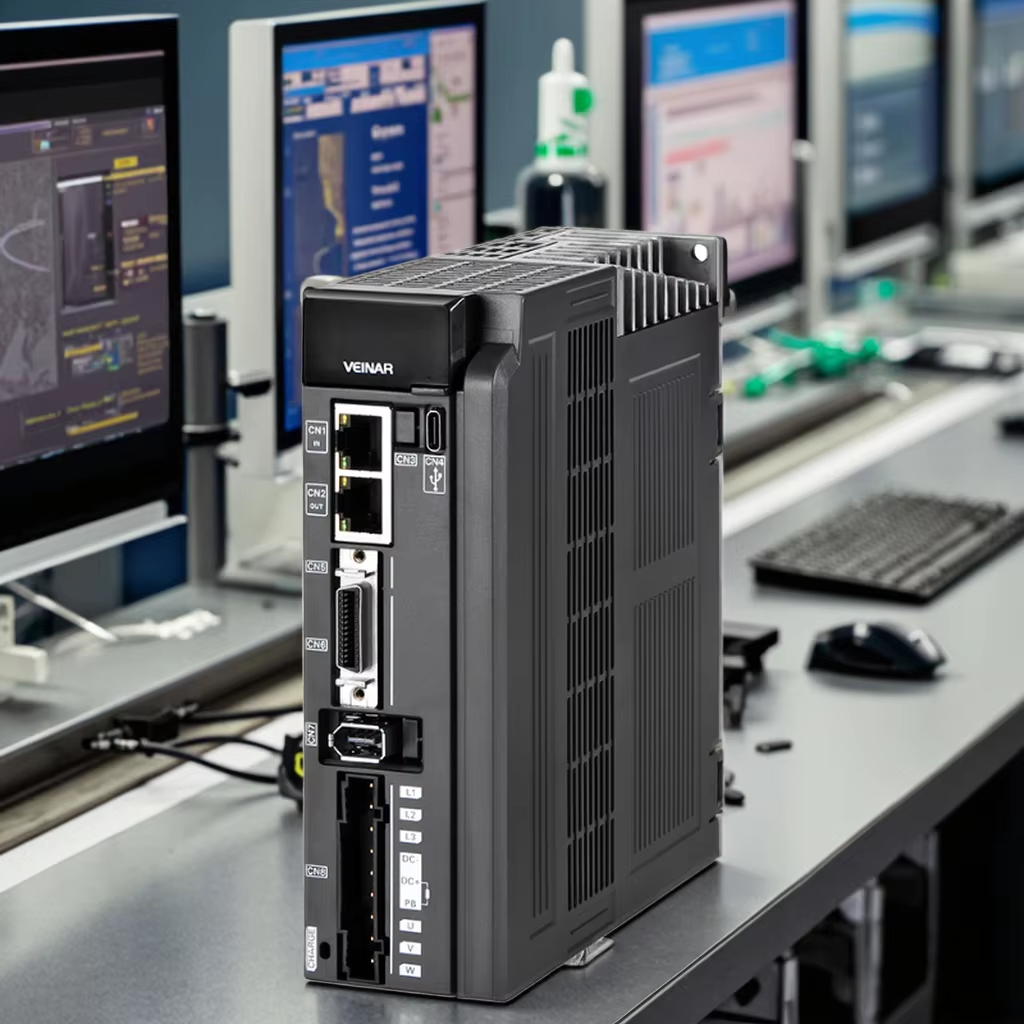
The Core Mechanism: How Gantry Synchronization Ensures Trajectory Accuracy
Multi-axis motion control and real-time synchronization for path fidelity
In high-speed laser cutting, trajectory accuracy depends on seamless coordination between X and Y axes—even at velocities exceeding 100 m/min. Multi-axis motion controllers compute precise velocity profiles for each motor–drive pair and issue commands at sub-millisecond intervals. Real-time synchronization eliminates position lag by tightly coupling servo loops that continuously compare commanded positions with actual feedback from encoders and linear scales. At such speeds, a 1-ms timing mismatch can introduce multi-millimeter path errors. To preserve contour fidelity through sharp corners and rapid direction shifts, advanced controllers employ look-ahead algorithms that anticipate acceleration changes and pre-tune axis speeds—ensuring the cutting head follows the programmed path with minimal deviation.
Feedback systems—encoders, linear scales, and servo tuning—that maintain axis alignment
High-resolution position feedback is essential to close the control loop with precision. Optical rotary encoders mounted on motor shafts provide speed-loop data, while linear scales affixed directly to the gantry rails deliver absolute Cartesian position measurements. The discrepancy between these signals reveals mechanical imperfections—including backlash, thermal expansion, and drivetrain compliance in ballscrews or rack-and-pinion systems. Servo tuning adjusts proportional, integral, and derivative (PID) gains to minimize overshoot and reduce settling time. In high-voltage AC multi-axis drive systems, feedback bandwidth must be sufficient to counteract torque ripple and phase lag that intensify at elevated speeds; otherwise, the two gantry sides drift apart, causing bridge skew. When properly tuned, these components keep both drive sides synchronized to within a few microns—ensuring the laser beam lands exactly where the CNC program specifies.
| Feedback Component | Role in Synchronization | Typical Accuracy Contribution |
|---|---|---|
| Rotary encoder (motor) | Detects shaft rotation; used for speed loop | ±10 µm repeatability |
| Linear scale (axis) | Measures actual carriage displacement | ±1 µm resolution |
| Servo gain adjustment | Reduces position error and settling time | Eliminates 80 % of dynamic lag |
Paired with a well-tuned high-voltage AC multi-axis drive, this integrated feedback architecture translates theoretical motion commands into physically accurate, straight, and repeatable cuts—even under high dynamic loads.
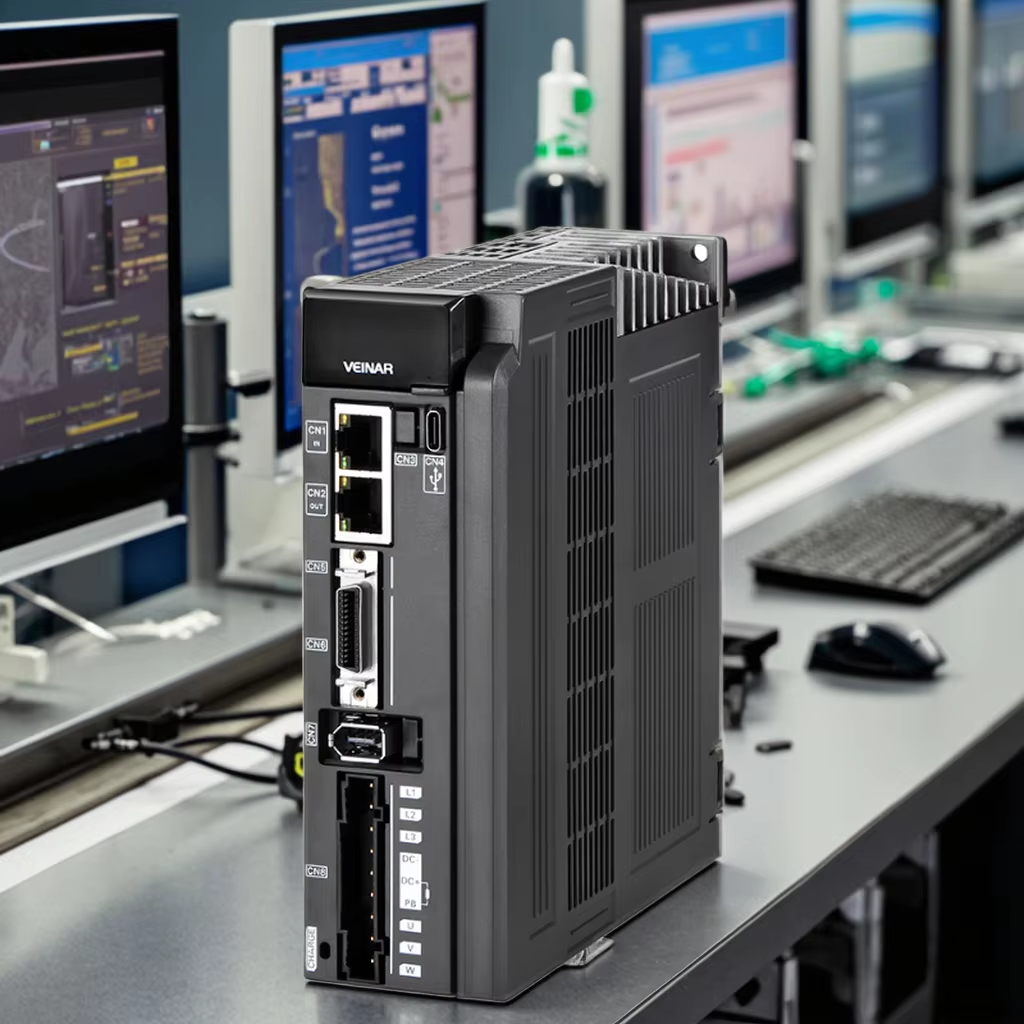
Laser–Motion Coupling: Why Sub-Millisecond Synchronization Enables Cutting Precision
Dynamic synchronization of laser pulse timing with gantry position under varying speed and acceleration
Cutting quality hinges on firing the laser precisely when the gantry reaches each target coordinate. During acceleration and deceleration—especially around curves and corners—the gap between commanded and actual position widens. A synchronized control system continuously compares real-time encoder feedback against motion commands and dynamically adjusts laser pulse timing to fire only when the gantry lies within the acceptable tolerance window. This prevents burned edges, inconsistent kerf width, and variable penetration depth. Without sub-millisecond coordination, even minor positional discrepancies cause measurable degradation in cut quality—particularly at high speeds, where acceleration-induced errors are magnified. Only a tightly integrated laser–motion controller can compensate quickly enough to maintain consistent dwell time per spot.
Virtual axis triggering and advanced control algorithms for microsecond-level coordination
To overcome latency in cascaded position loops, modern cutting controllers use virtual axis triggering. A software-defined master axis generates position-triggered events at microsecond intervals. When the physical gantry reaches the programmed point, the virtual axis issues a fire command to the laser source. Advanced algorithms—including predictive feed-forward and state observers—anticipate upcoming axis positions and compensate for processing delays. By aligning the laser pulse with the virtual axis rather than waiting for delayed feedback, the system achieves coordination within a few microseconds. This approach is especially critical in high-voltage AC multi-axis drive setups, where inherent phase lag and signal propagation delays would otherwise degrade performance. With microsecond-level virtual triggering, complex contours retain sharp corners and dimensional accuracy.
Efficiency Gains: Quantifying the ROI of Synchronized Control in High-Speed Operation
Synchronized motion control delivers direct, measurable ROI in high-speed laser cutting operations. Sub-millisecond axis coordination maintains trajectory fidelity during rapid acceleration, reducing scrap caused by positional errors. Fewer rejected parts lower material costs and rework labor—directly decreasing cost per unit. Synchronized operation also reduces mechanical stress across the drive train, extending component life and lowering maintenance frequency. For high-voltage AC multi-axis drive systems running at sustained throughput, these improvements collectively boost overall equipment effectiveness (OEE) by 10–15%, with typical payback periods under 18 months. The result is a clear financial justification for investing in advanced control hardware and software.
The High-Voltage AC Multi-Axis Drive Challenge: Why Synchronization Demands Intensify at Speed
Torque ripple, phase lag, and signal propagation delays in high-voltage AC multi-axis drive systems
High-speed laser cutting pushes gantry systems to their physical limits—and high-voltage AC multi-axis drives face three interrelated synchronization challenges. Torque ripple, caused by magnetic flux variations in the motor, introduces periodic speed fluctuations that misalign axes during rapid direction changes. Phase lag grows as the commanded motion signal increasingly lags behind actual motor response—worsening with higher acceleration demands. Signal propagation delays—even on deterministic buses like EtherCAT—add microsecond-level timing offsets between axes. These effects compound: torque ripple excites mechanical resonance, phase lag erodes effective servo bandwidth, and propagation delays prevent timely correction. Without robust compensation—such as predictive feed-forward and adaptive gain scheduling—the resulting trajectory error exceeds the laser’s tolerance window. Today’s most capable drives integrate these features to sustain micron-level axis alignment at speeds above 100 m/min, enabling precise, high-throughput cutting of thin-gauge materials with tight kerf specifications.
FAQs
Why is synchronization critical in high-speed laser cutting?
Synchronization ensures trajectory accuracy by coordinating the movement of X and Y axes, eliminating position lag and maintaining cut precision during high-speed operations.
How do feedback systems improve motion control?
Feedback systems like encoders and linear scales provide real-time data, enabling servo tuning to minimize position errors, adjust gains, and maintain axis alignment within microns.
What role does virtual axis triggering play in cutting precision?
Virtual axis triggering aligns laser pulses with the gantry’s position in real time, compensating for signal delays to achieve microsecond-level coordination.
What are the financial benefits of synchronized motion control?
Synchronized motion control improves equipment effectiveness, reduces scrap and maintenance costs, and typically delivers ROI with payback periods under 18 months.
What challenges do high-voltage AC multi-axis drives face?
These drives face challenges like torque ripple, phase lag, and signal propagation delays, which can degrade synchronization at high speeds without advanced compensation techniques.
Table of Contents
- The Core Mechanism: How Gantry Synchronization Ensures Trajectory Accuracy
- Laser–Motion Coupling: Why Sub-Millisecond Synchronization Enables Cutting Precision
- Efficiency Gains: Quantifying the ROI of Synchronized Control in High-Speed Operation
- The High-Voltage AC Multi-Axis Drive Challenge: Why Synchronization Demands Intensify at Speed
- FAQs