
 EN
EN
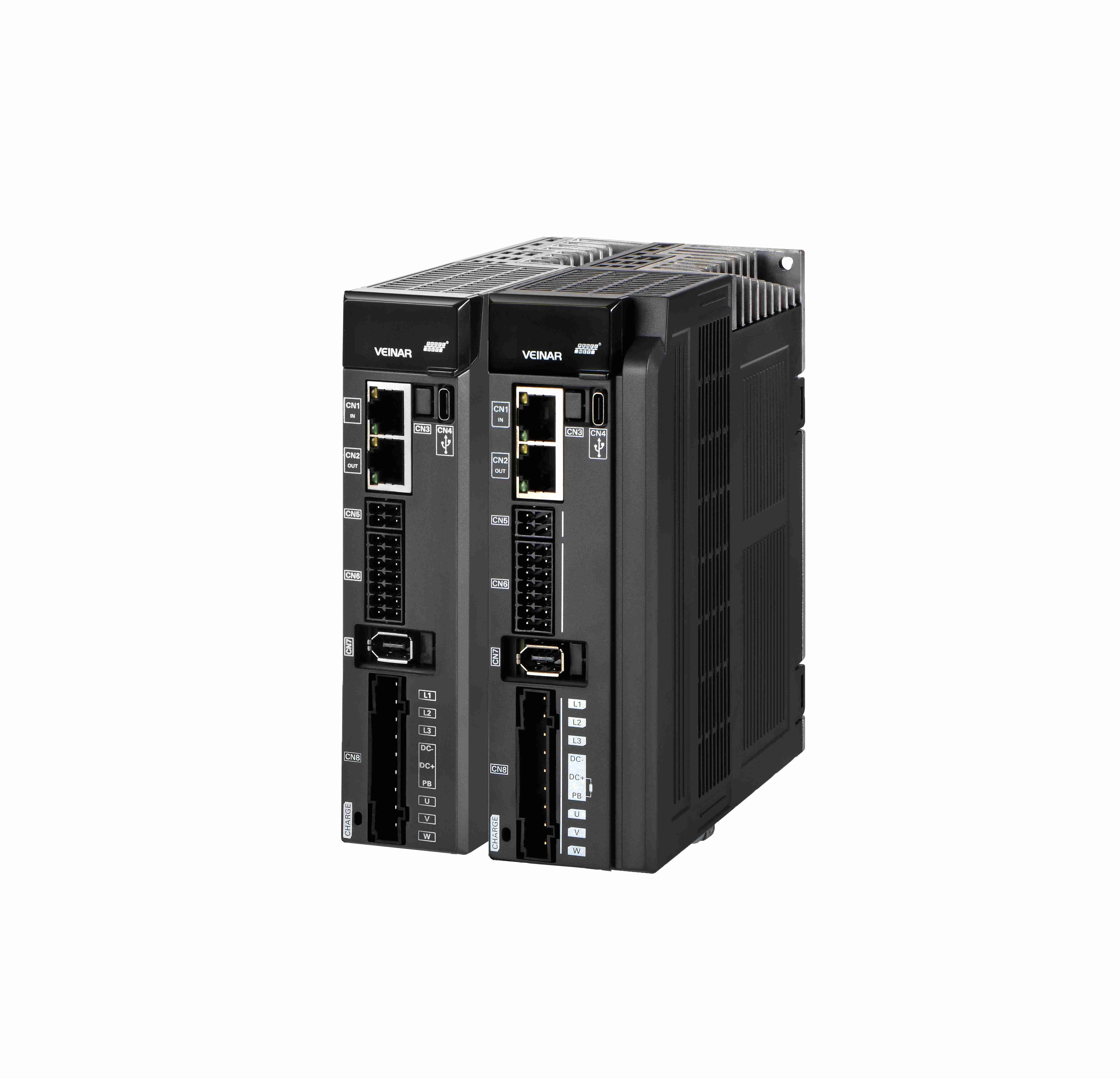
The Line-Level Challenge: Why Fragmented Motion Control Limits Throughput and Traceability
Production lines in automotive welding and electronic assembly often rely on a patchwork of single-axis or small-group controllers, each operating in isolation. This fragmented approach creates data silos that block seamless traceability from raw material to finished product. Without a unified motion network, synchronizing actions across dozens of axes becomes impossible—causing micro-stops and idle time between stations. Even when individual robots meet their specs, overall line throughput plateaus because no master controller coordinates the sequence in real time. The absence of PLC-compatible industrial direct servo architectures compounds the problem: proprietary protocols and custom gateways delay integration and obscure process data until it’s too late for corrective action. Quality issues frequently go undetected until final inspection, driving up scrap rates and rework costs. Commissioning and ramp-up drag on as engineers tune each isolated axis, inflating maintenance overhead. As volumes grow, the hidden costs of fragmentation erode the financial case for automation. Only a holistic architecture that links all motion axes can deliver the deterministic coordination and whole-line traceability modern manufacturing demands.
Deterministic Synchronization at Scale: How Ethernet Multi-Axis Drives Enable Coordinated Motion Across 100+ Axes
Sub-microsecond jitter (<1 µs) for weld seam consistency and robotic path fidelity
Ethernet-based multi-axis drives leverage distributed clocks to synchronize motion across 100+ axes with sub-microsecond jitter (<1 µs). This deterministic timing keeps weld torches and robots moving in lockstep—eliminating micro-deviations that cause inconsistent penetration or misaligned seams. Servo loops updated at 20 kHz ensure rigid path fidelity, so every automotive body panel receives identical heat input and trajectory, directly reducing rework and structural variability.
PLC-compatible industrial direct servo architectures bridging legacy logic and real-time motion control
PLC-compatible industrial direct servo architectures connect drives directly to the PLC backplane or EtherCAT network, removing dedicated motion controllers. This integration allows plants to retain familiar ladder logic and I/O mapping while executing deterministic motion control—servo cycles run within the same real-time domain as the PLC scan. Legacy systems gain multi-axis synchronization without wholesale replacement, preserving engineering investments and scaling seamlessly from a single cell to whole-line linkage.
Proven Application Value: Real-World Gains in Automotive Welding and Electronics Assembly
The move from fragmented motion control to Ethernet-based multi-axis drives delivers measurable results in two of the most demanding manufacturing environments. The following examples illustrate how precision synchronization and real-time data flow translate directly into higher throughput, better quality, and tighter process control.
Case study: 37% reduction in weld cycle variance with an EtherCAT-linked 84‑axis welding cell
In a 2023 deployment, a leading automotive OEM replaced a conventional fieldbus architecture with an 84‑axis EtherCAT welding cell using PLC-compatible industrial direct servo drives to coordinate clamping, positioning, and laser welding heads. Sub-microsecond synchronization eliminated timing drift, leading to a 37% reduction in weld-cycle variance (OEM process data, 2023). The tighter consistency improved weld seam integrity on body-in-white assemblies and reduced rework, enabling the line to run at a sustained 45 jobs per hour—a 12% throughput gain over the previous system.
Electronics assembly use case: Synchronized pick‑and‑place + dispensing + vision‑guided alignment
A high-density electronics assembly line for power modules linked pick-and-place, precision dispensing, and vision-guided alignment under one EtherCAT-based motion controller. The multi-axis drive system synchronized eight axes per cell, reducing pick-to-vision latency to under 200 µs. This cut component placement time by 22% and virtually eliminated misalignment defects. The architecture also allowed on-the-fly adjustment of dispensing parameters via OPC UA, giving production engineers immediate access to process data for traceability without stopping the line.
Seamless MES Integration and Process Intelligence via Real-Time Industrial Ethernet
Modern manufacturing execution systems (MES) require a direct digital pipeline to the shop floor. Real-time industrial Ethernet protocols bridge this gap, transforming motion control networks into rich data sources for enterprise-level intelligence. This convergence moves factories beyond simple throughput counting toward a holistic view of operational health and product integrity.
OPC UA and EtherNet/IP enable bidirectional data flow for full traceability and OEE analytics
Protocols like OPC UA and EtherNet/IP establish a secure, bidirectional channel between the controller and higher-level systems—enabling automatic assembly of a complete process record for every unit. Torque signatures, weld parameters, and axis positions are captured directly from the drive, often timestamped at the drive level, building a digital thread for full traceability without manual operator input. The same data stream feeds Overall Equipment Effectiveness (OEE) analytics, correlating motion-specific events—like unplanned stoppages or cycle-time drift—with accurate performance metrics. A leading automotive manufacturer used this methodology to identify micro-stoppages in a framing line, capturing a 15% OEE improvement opportunity previously invisible to traditional PLC monitoring (2023). This closed-loop architecture enables process controllers to automatically adjust parameters based on synchronizer values and quality results, directly linking process intelligence with real-time control.
Future-Proof Scalability: Flexible EtherCAT Topologies for Line Expansion, Redundancy, and Whole-Line Linkage
EtherCAT’s support for multiple topologies—line, ring, star, and tree—gives manufacturers the flexibility to scale multi-axis motion control without the constraints of legacy fieldbuses. A ring topology provides built-in cable redundancy: if a connection is damaged, the network reconfigures in under 15 µs to maintain deterministic operation, preventing unplanned stops in high-throughput welding or assembly cells. This same architecture enables whole-line linkage, where every axis across the entire production line—from material handling robots to final inspection stations—is synchronized on a single, distributed clock. Adding new machines or stations becomes plug-and-play; the network automatically detects new nodes and extends the time base without disrupting existing motion. PLC-compatible industrial direct servo drives fit natively into these topologies, allowing engineers to leverage familiar PLC programming environments while achieving the hard real-time performance of EtherCAT. This integration preserves investments in legacy control logic and training. For example, a major automotive tier-one supplier expanded a body-in-white welding line from 60 to 140 axes over six months without downtime for control system re-engineering. The result is a future-proof manufacturing infrastructure that supports incremental scaling, robust redundancy, and cohesive whole-line coordination—ensuring production lines can adapt to new products, higher volumes, and evolving automation requirements with minimal rework and maximum precision.
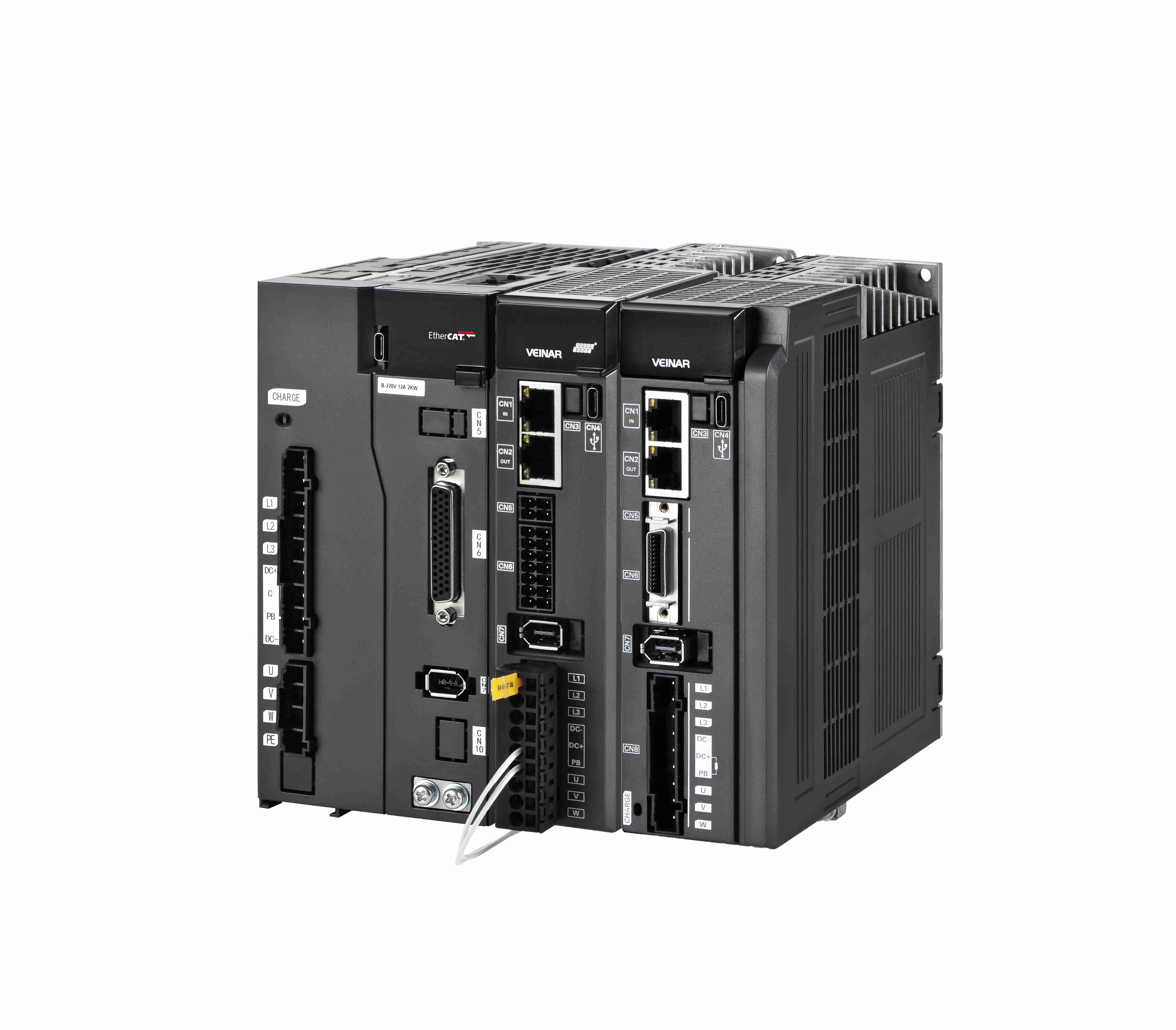
FAQs
What is fragmented motion control, and why is it problematic?
Fragmented motion control refers to the use of isolated single-axis or small-group controllers that lack coordination and synchronization, causing micro-stops, lower throughput, and limited traceability in production lines.
How does Ethernet-based multi-axis drive technology improve performance?
Ethernet-based multi-axis drives enable deterministic synchronization and real-time motion control across 100+ axes with sub-microsecond jitter, boosting throughput, reducing defects, and maintaining consistent quality.
What industries benefit most from transitioning to holistic motion control architectures?
Industries such as automotive welding and electronics assembly benefit significantly due to their high requirements for precision, throughput, and traceability.
What is the advantage of using PLC-compatible industrial direct servo architectures?
PLC-compatible industrial direct servo architectures integrate motion control into the existing PLC system, enabling synchronization without replacing legacy infrastructure and reducing overhead costs.
How does EtherCAT support scalability and redundancy in motion control systems?
EtherCAT supports multiple topologies like ring, star, and tree, providing flexibility for line expansion, cable redundancy, and seamless linkage across production lines.
Table of Contents
- The Line-Level Challenge: Why Fragmented Motion Control Limits Throughput and Traceability
- Deterministic Synchronization at Scale: How Ethernet Multi-Axis Drives Enable Coordinated Motion Across 100+ Axes
- Proven Application Value: Real-World Gains in Automotive Welding and Electronics Assembly
- Seamless MES Integration and Process Intelligence via Real-Time Industrial Ethernet
- Future-Proof Scalability: Flexible EtherCAT Topologies for Line Expansion, Redundancy, and Whole-Line Linkage
-
FAQs
- What is fragmented motion control, and why is it problematic?
- How does Ethernet-based multi-axis drive technology improve performance?
- What industries benefit most from transitioning to holistic motion control architectures?
- What is the advantage of using PLC-compatible industrial direct servo architectures?
- How does EtherCAT support scalability and redundancy in motion control systems?