
 EN
EN
Introduction
Modern smart manufacturing is constantly evolving toward integrated, lean, and flexible production models, yet most legacy automated production lines still face universal structural limitations. Traditional dispersed single-axis servo layouts feature fragmented control logic, messy on-site wiring, and inconsistent motion coordination across equipment axes. These long-standing issues lead to bloated operational investments, unstable production consistency, and cumbersome daily equipment management, restricting the flexible upgrade of mid and downstream manufacturing enterprises.
As industrial Ethernet communication technology becomes the mainstream standard for intelligent manufacturing transformation, EtherCAT-based multi-axis direct servo solutions have gradually become the preferred iterative direction for production line renovation. Drawing on years of cross-border automation project implementation experience and industry research from global motion control authoritative institutions, integrated Ethernet multi-axis drive architecture effectively resolves the structural defects of traditional servo systems. It delivers balanced improvements in cost control, production stability, and operational simplicity, bringing sustainable optimization value for medium and large-scale automated production scenarios. This article objectively analyzes the core technical and commercial advantages of modern multi-axis direct servo systems, explaining why this solution has become a key upgrade choice for global manufacturing intelligent transformation.
Lean Operational Structure Cuts Redundant Manufacturing Overhead
For modern manufacturing enterprises, invisible repetitive overhead is one of the key factors affecting long-term profitability. Most traditional automated production lines adopt a decentralized single-axis servo configuration, where each motion unit is equipped with independent power supply modules, signal transmission lines, and independent control terminals. This fragmented layout is not only space-consuming but also generates continuous additional costs in equipment installation, circuit layout, production line adjustment, and later equipment iteration.
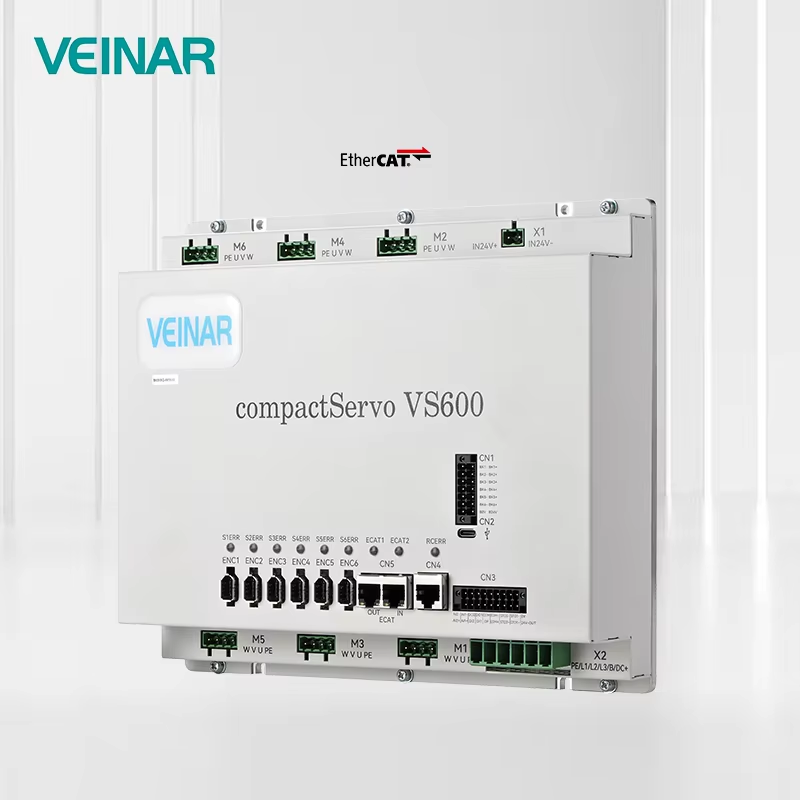
Industrial automation engineering practice and industry verification data show that standardized Ethernet multi-axis direct servo architecture adopts an integrated modular design, unifying power distribution circuits and bus communication frameworks for all motion axes. This highly integrated structure simplifies the overall electrical control system of production lines, greatly reducing on-site wiring workload and material usage while lowering manual costs for installation and subsequent line modification. Different from traditional servo systems that rely on multiple intermediate transmission structures for power output, direct servo design optimizes the mechanical transmission path, reducing structural wear caused by intermediate parts and lowering long-term operational and replacement overhead.
In batch transformation projects of discrete manufacturing and flexible production lines, standardized multi-axis servo integration solutions have helped manufacturers optimize their cost structure significantly. The built-in high-precision algorithm compensation and intelligent jitter suppression capabilities stabilize production processing standards, effectively avoid resource waste caused by processing deviation, and realize lean control of full-cycle production costs. This structural cost optimization is universally applicable to most automated manufacturing scenarios, providing stable profit space for enterprise production and operation.
Integrated Motion Control Stabilizes Overall Production Operation Quality
Stable and coordinated motion control is the core foundation for standardized production in intelligent factories. The biggest structural drawback of traditional single-axis servo combinations lies in independent operation of each axis, lacking unified clock synchronization and real-time data interaction mechanisms. In continuous and cyclic automated production processes, asynchronous operation between multiple axes is prone to cumulative trajectory errors, operational jitter, and dynamic response delay, which affects the overall operational stability of the production line and restricts the standardized iteration of manufacturing processes.
EtherCAT industrial Ethernet protocol, as a mainstream open industrial communication standard in the global automation industry, provides ultra-high-speed real-time data transmission support for multi-axis collaborative operation. Modern multi-axis direct servo systems are compatible with multiple mainstream industrial communication protocols, forming a highly compatible and expandable motion control platform. Relying on mature multi-axis synchronous operation logic and trajectory optimization algorithms in the industry, the system realizes collaborative linkage of multiple motion units, ensuring consistent dynamic response and operational rhythm of each axis during continuous production.
From the perspective of long-term production operation, this integrated collaborative control mode effectively avoids production fluctuation problems caused by inconsistent axis operation. It maintains stable and unified processing standards in mass continuous production, optimizes the overall operational fluency of automated lines, and provides reliable technical support for enterprises to realize standardized, large-scale, and stable intelligent production. Such overall operational quality improvement is an indispensable core condition for manufacturing enterprises to achieve long-term process optimization.
Modular Standardized Design Simplifies Full-Cycle Operation and Management
The complexity of equipment debugging and daily management is an important factor affecting the flexible iteration of factory production lines. Traditional scattered servo equipment requires independent parameter calibration, program debugging, and fault inspection for each motion axis. The independent control logic leads to complicated operation processes, high technical threshold for on-site management, and long troubleshooting cycles once equipment abnormalities occur, easily affecting continuous production arrangements.
Modern Ethernet multi-axis direct servo systems adopt a highly standardized modular integrated design, with unified specification standards for wiring interfaces, signal adaptation, parameter management and system debugging. All motion axes under the unified control platform can realize centralized parameter configuration, state monitoring and operation management, greatly simplifying the overall equipment debugging process and daily operation steps. The standardized structural design unifies the equipment operation logic, avoiding management confusion caused by inconsistent specifications of discrete equipment.
In terms of daily operation and fault response, the real-time bus communication mechanism can synchronously feed back the operating state of all motion units to the upper control system, realizing rapid positioning and efficient processing of abnormal problems. The optimized mechanical structure reduces vulnerable intermediate transmission components, lowers the frequency of daily equipment maintenance, and shortens equipment downtime. For factories of different scales, standardized modular design effectively reduces the threshold of equipment operation and maintenance, helping enterprises realize refined and efficient production line management.
Professional R&D and Manufacturing System Supports Global Automation Iteration
High-quality industrial automation equipment solutions rely on professional technical accumulation, standardized manufacturing systems and perfect global service capabilities. As a mature motion control solution provider rooted in global industrial automation for many years, Highsense has built a professional R&D system composed of Sino-German industry experts, with long-term technical precipitation and rich cross-border project practical experience in the field of motion control.
The brand implements standardized and rigorous production management processes covering incoming material inspection, program calibration, performance testing, aging verification and finished product standardization processing, ensuring that every set of motion control equipment maintains stable and consistent industrial-grade performance. With a complete and diversified product system and flexible solution customization capabilities, Highsense can adapt to the differentiated production iteration needs of various automated manufacturing scenarios. Supported by a mature global supply chain layout and full-cycle technical service system, the brand provides stable and reliable motion control support for factory intelligent transformation projects in multiple countries and regions, helping global manufacturing enterprises complete lean and intelligent production line upgrades.
Conclusion
Ethernet multi-axis direct servo technology brings structural optimization changes to automated production line transformation through three core advantages: lean cost control, stable collaborative operation, and simple standardized management. Breaking the limitations of traditional scattered servo control modes, this modern motion control solution adapts to the flexible and intelligent development trend of global manufacturing. With the continuous upgrading of industrial Ethernet technology and modular manufacturing technology, integrated multi-axis servo systems will become the mainstream configuration for new intelligent factories and old production line renovations, continuously empowering the high-quality development of the global manufacturing industry.
Table of Contents
- Introduction
- Lean Operational Structure Cuts Redundant Manufacturing Overhead
- Integrated Motion Control Stabilizes Overall Production Operation Quality
- Modular Standardized Design Simplifies Full-Cycle Operation and Management
- Professional R&D and Manufacturing System Supports Global Automation Iteration
- Conclusion