
 EN
EN
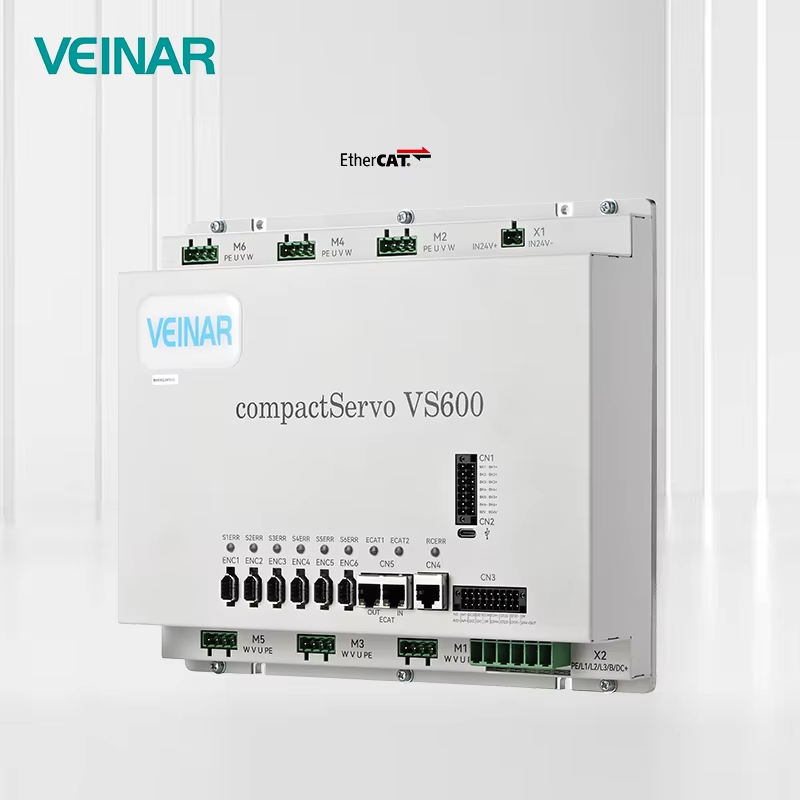
The Core Role of Custom EtherCAT Servo in Multi-variety Production
In today’s manufacturing landscape, multi-variety and small-batch production has become a mainstream trend, especially in high-precision sectors like semiconductor manufacturing. The need to switch between different products quickly while upholding strict precision standards has become a key challenge for manufacturers. Among the solutions emerging to address this, the custom ethercat servo for semiconductor equipment stands out as a reliable and adaptable option, with its flexible parameter configuration perfectly catering to the demands of diversified production. Semiconductor equipment often needs to process a wide range of components—from tiny microchips to specialized semiconductor parts—each requiring unique processing parameters. This means the servo system must not only deliver micron-level precision but also adjust swiftly to different production tasks without compromising performance.
Unlike standard servo solutions that offer rigid, one-size-fits-all settings, the custom ethercat servo for semiconductor equipment is designed with adaptability at its core. It understands the unique pain points of semiconductor manufacturing, where even the smallest deviation can lead to costly product failures, and provides parameter configurations that can be tailored to specific production needs. Whether it’s handling the delicate processing of semiconductor wafers or manufacturing high-precision semiconductor components, this custom servo system can switch between production modes seamlessly. Its ability to accommodate multiple production requirements without extensive mechanical retooling makes it an indispensable tool for manufacturers looking to stay competitive in a market where product diversity and quick turnaround times are critical.
Rich Parameter Options for Seamless Tool Adaptation
One of the most notable strengths of the custom ethercat servo for semiconductor equipment is its robust parameter library, centered around the EtherCAT parameter server. This server hosts an impressive 16 distinct tool-change strategies, enabling it to seamlessly accommodate a wide spectrum of tools—from ultra-fine 0.5mm micro-drills used for intricate semiconductor component machining to large 300mm face mills for broader processing tasks. This level of flexibility eliminates the need for multiple dedicated servo systems for different tools, simplifying production line setups and reducing equipment costs.
What truly sets this servo apart is the speed of parameter adjustments. Modifying key settings like electronic gear ratios and cam curves takes just 3 minutes—an astonishing 20x improvement over traditional mechanical retooling, which can take up to an hour. For semiconductor manufacturers, this speed is a game-changer. Semiconductor production often involves frequent tool changes and parameter tweaks to handle different component designs, and every minute saved on retooling directly translates to higher productivity and shorter lead times. Additionally, the user-friendly interface of the EtherCAT parameter server makes these adjustments straightforward, even for on-site production teams without specialized technical expertise. This means manufacturers can adapt to new orders or product design changes quickly, without relying on external technicians, further enhancing operational agility.
For semiconductor equipment, where precision and consistency are non-negotiable, the custom servo’s parameter configuration also ensures accuracy. Every adjustment is repeatable and reliable, eliminating the variability that often comes with manual or mechanical adjustments. This consistency is crucial when processing semiconductor components that require tight tolerances, as it reduces defect rates and minimizes material waste.
Practical Gains in Mixed Production Scenarios
The real-world value of the custom ethercat servo for semiconductor equipment becomes vivid when looking at actual application cases. As highlighted in industry practice, a medical device manufacturer leveraged the flexibility of this servo to achieve mixed production of orthopedic implants and dental components. Before adopting the custom EtherCAT servo, switching production lines between these two product types took a cumbersome 45 minutes. After implementation, the changeover time plummeted to just 8 minutes—a dramatic reduction that significantly boosted the company’s responsiveness to small-batch orders, a common demand in both medical and semiconductor industries.
In the semiconductor sector, similar success stories abound. A semiconductor component manufacturer that produces both micro-sized sensor chips and larger semiconductor modules adopted this custom servo to streamline its mixed production. The company frequently receives small-batch orders for specialized semiconductor components, which previously required time-consuming mechanical retooling that ate into profit margins. With the servo’s 16 tool-change strategies and rapid parameter adjustments, the manufacturer can now switch between producing 0.5mm precision-drilled semiconductor parts and 300mm processed modules in minutes. This not only cut changeover time by more than 75% but also allowed the company to take on more small-batch orders without sacrificing efficiency or precision.
Beyond reducing changeover time, the flexible parameter configuration also contributes to cost savings. By eliminating the need for multiple dedicated machines or extensive mechanical modifications, manufacturers can optimize their production line layout and reduce capital expenditure. For example, a semiconductor equipment producer reported a 30% reduction in production line costs after integrating the custom servo, as it could handle multiple product types with a single system. Additionally, the reduced changeover time means higher machine utilization rates—equipment spends less time idle and more time in productive operation, further driving down unit costs.
Adapting to the Future of Diversified Manufacturing
As manufacturing trends continue to shift toward more diverse product lines and smaller batch sizes, the demand for adaptable equipment solutions will only grow stronger. The custom ethercat servo for semiconductor equipment is well-positioned to meet this demand, thanks to its flexible parameter configuration and ability to tailor settings to specific production needs. It’s not limited to just semiconductor and medical device manufacturing, either—this adaptable solution can be customized for industries like electronics manufacturing, aerospace component production, and precision engineering, where multi-variety production is becoming the norm.
Looking ahead, the potential of this technology is even more promising. As smart factory technologies become more prevalent, the custom EtherCAT servo can integrate seamlessly with other systems, such as Manufacturing Execution Systems (MES) and Internet of Things (IoT) platforms. This integration enables real-time data-driven parameter adjustments—for example, production line data can trigger automatic parameter changes based on incoming orders, further reducing human intervention and increasing efficiency. In the semiconductor industry, where technological advancements are rapid, this adaptability will be crucial for keeping up with new product designs and evolving manufacturing processes.
Another key advantage is its ability to support sustainable manufacturing. By reducing changeover time and material waste, the custom servo helps manufacturers lower their environmental footprint while improving profitability. This aligns with the growing emphasis on sustainability in the manufacturing sector, making it an even more valuable investment for forward-thinking businesses.
In a market where responsiveness and flexibility are key to staying competitive, the custom ethercat servo for semiconductor equipment offers a powerful solution for multi-variety production. Its flexible parameter configuration, rapid adjustment capabilities, and real-world proven benefits make it an indispensable tool for manufacturers looking to thrive in the era of diversified manufacturing. Whether it’s handling small-batch orders, reducing changeover time, or maintaining precision across multiple product types, this custom servo delivers the adaptability that modern manufacturing demands.