
 EN
EN
Scratch-Free Handling of LCD Panels: Technical Dynamics of Motion Control Synchronization
In the precision manufacturing of advanced display substrates, the management of mechanical transport remains a focal point for process stability. As production environments move toward higher throughput requirements, the mechanical interactions between the handling apparatus and the fragile substrate become increasingly complex. Maintaining surface integrity during automated transfer requires a granular approach to motion control, specifically emphasizing the technical coordination between multi-axis gantry systems and direct drive architectures.
The Dynamics of Substrate Sensitivity in Automated Environments
Substrate sensitivity is a primary consideration in large-format display manufacturing. During automated transitions, mechanical oscillations can manifest as surface irregularities. Traditional transmission systems—often reliant on intermediate gearboxes or belt assemblies—frequently introduce high-frequency vibrations. When these vibrations occur, they can lead to microscopic inconsistencies that impact the long-term viability of the substrate. Engineering teams often identify these mechanical feedback loops as a core area for process audit. Minimizing friction and ensuring a smooth, uniform acceleration profile are technical mandates for maintaining the structural equilibrium of delicate glass components.
Mechanical Integration of Direct Drive Architectures
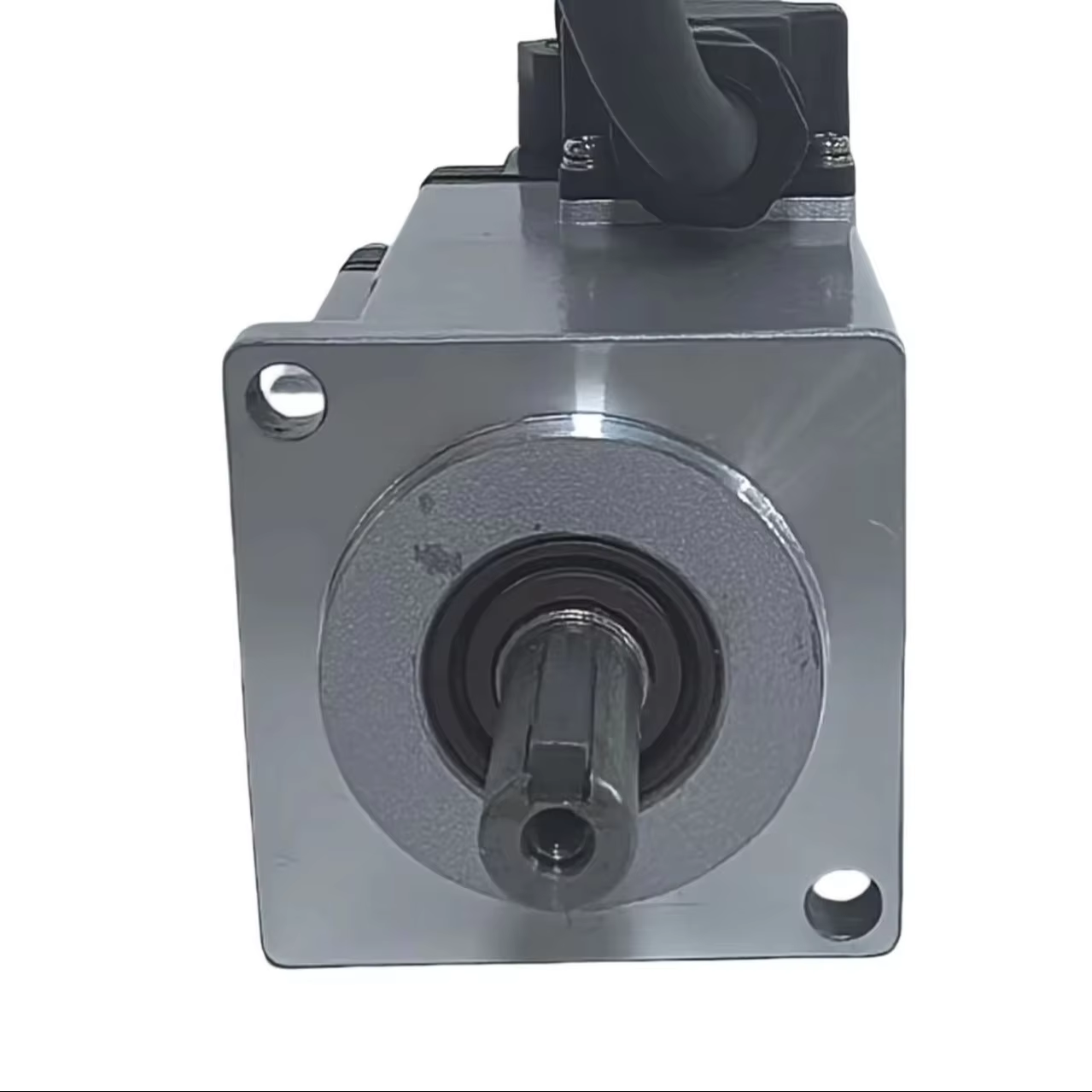
Direct drive technology modifies the interface between the control system and the mechanical load. By bypassing traditional mechanical transmission components such as couplings and intermediate linkages, the system achieves a more direct linkage to control pulses. This approach focuses on reducing mechanical backlash, which is often a point of failure in conventional motion setups. Within an automated production line, this direct communication allows for a continuous and predictable response to input data. The reduction of moving parts simplifies the mechanical chain, providing a more transparent control environment where torque is applied directly to the movement, thereby supporting the stability required for sensitive substrate handling.
Synchronization Principles for Multi-Axis Gantry Systems
For large-format substrates, single-drive configurations are frequently insufficient due to load distribution requirements. Multi-axis gantry setups utilize dual-drive architectures to distribute the weight across the surface area. A critical technical challenge in these systems is maintaining phase-aligned motion. If the motors on a gantry deviate from their commanded position, the resulting framework skew can exert uneven mechanical stress on the substrate. Modern control theory addresses this through absolute position tracking and high-speed feedback loops. By slaving the secondary axis to the primary through a synchronized "lock" configuration, the system maintains a unified motion profile, ensuring the load is supported evenly across the structural frame.
Analytical Approaches to 3-Axis Precision Control
The coordination of 3-axis precision control acts as the architectural foundation for complex trajectory management. Integrating the X, Y, and Z axes within a unified servo environment allows for sophisticated path planning. This level of control relies on high-resolution data feedback, where encoders provide constant stream processing to the motion controller. By adjusting torque in real-time, the system compensates for inertial variations as the substrate transitions between processing stages. This analytical approach to movement ensures that the acceleration and deceleration phases are managed with mathematical precision, preventing the sudden force changes that could otherwise compromise the stability of the substrate.
Structural Considerations for Industrial Automation
Effective process optimization is rooted in the careful selection and integration of motion control components. HighSenseTrade provides the technical resources and supply chain infrastructure necessary for the deployment of these sophisticated motion architectures. By focusing on the procurement of high-performance components, including precision servo controllers and reliable direct drive motors, HighSenseTrade supports the industrial engineering requirements of modern manufacturing environments. This professional involvement in the supply chain ensures that technical operators can access the specialized components required to maintain the stability and alignment of their automation systems, reflecting a standard of technical support essential for complex manufacturing operations.
Table of Contents
- Scratch-Free Handling of LCD Panels: Technical Dynamics of Motion Control Synchronization
- The Dynamics of Substrate Sensitivity in Automated Environments
- Mechanical Integration of Direct Drive Architectures
- Synchronization Principles for Multi-Axis Gantry Systems
- Analytical Approaches to 3-Axis Precision Control
- Structural Considerations for Industrial Automation