
 EN
EN
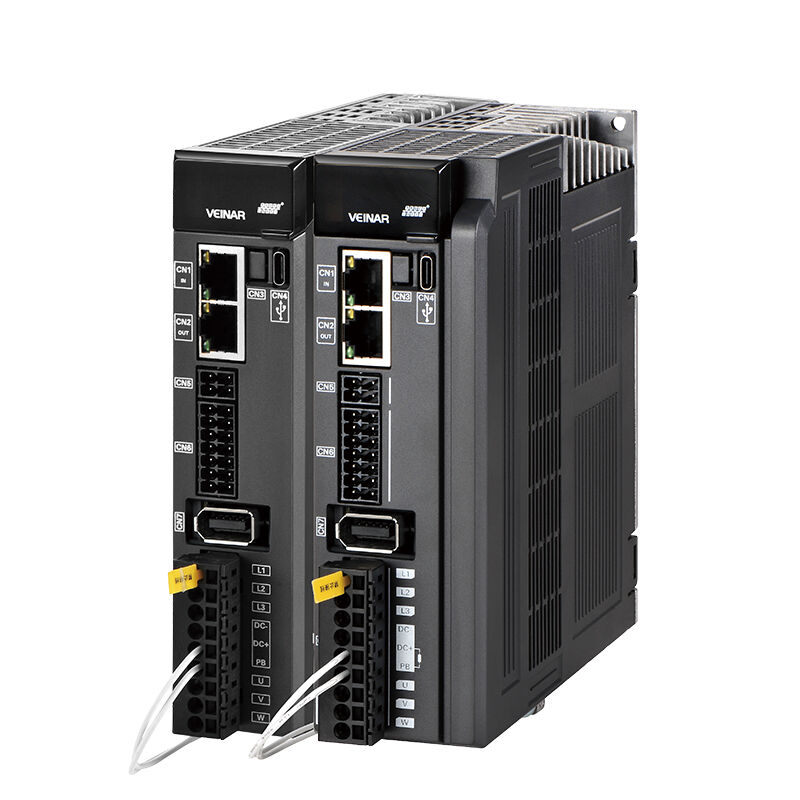
Why High Switching Frequency Enables High-Speed High-Precision Servo Performance
The Sub-Micron Positioning Challenge in Desktop CNC Systems
Getting desktop CNC systems to work at sub-micron levels presents special challenges related to vibrations and temperature stability. Industrial grade machines sit on specially designed foundations that absorb vibrations, but benchtop models have to deal with all sorts of noise from their surroundings. Everyday vibrations in the lab or workshop get amplified by the machine frame itself, leading to bigger positioning mistakes than anyone wants. When working with materials like optical glass or certain aerospace metals, even tiny errors matter a lot. A half micron difference is enough to ruin an entire component. Heat adds another layer of complexity. As motors run and ball screws turn, they actually change size at the micron level over time. Research published in the CIRP Annals shows that about 60% of those pesky sub-micron errors come down to thermal drift in smaller systems. To handle this, manufacturers need servo drives that can adjust on the fly to these microscopic changes while still making quick and precise movements across complex tool paths.
How 20 kHz Switching Reduces Current Ripple and Torque Jitter
Servo drives running at or above 20 kHz PWM frequency really cut down on current ripple, which is basically what causes those annoying torque jitters that mess up surface finishes during precision machining work. The high frequency switching actually makes the current decay intervals much shorter between each pulse, so the electromagnetic fields stay more stable overall, resulting in smoother motor operation. Testing in motion control labs has shown these systems can reduce torque fluctuations by as much as 40% when compared to older systems below 10 kHz. This difference becomes super important when dealing with those tiny micro-stepovers under 10 microns, where low frequency drives tend to set off unwanted mechanical vibrations and chatter problems. Thanks to silicon carbide (SiC) transistors, manufacturers can now reach these higher frequencies without worrying about excessive heat buildup from switching losses, which used to be a major problem back in the day. Pair these fast servo systems with field oriented control (FOC) technology and they maintain remarkable torque consistency within half a percent across different speeds. For anyone working with complex shapes and tight tolerances, this level of performance is absolutely essential if we want to avoid those frustrating step errors that accumulate over time during contouring operations.
Closed-Loop Precision: Encoder Fidelity, Latency, and Contour Accuracy
Latency-Induced Contour Errors in Micro-Cutting (<10 µm Stepovers)
Getting ultra precision out of CNC machines depends heavily on having almost zero lag in the feedback loop. If there's more than 100 microseconds delay before the machine gets position updates, the axes start getting out of sync during those tiny stepovers. This becomes a real problem for 3D contouring work where tool paths need to be under 10 microns apart and everything has to move together perfectly. Some tests done at NIST found that when there was around 200 microseconds of delay in the system, it actually caused contour errors measuring about 5 microns in titanium parts. To fix these issues, manufacturers now use high speed servo drives that cut processing time down below 50 microseconds. These improvements come from special software running on ARM Cortex M7 controllers that handle tasks in real time. Machines without this kind of quick response tend to accumulate small errors from heat changes and other factors, which eventually adds up to noticeable positioning problems after extended operation.
17-Bit+ Resolvers vs. Magnetic Encoders: Bandwidth–Resolution Tradeoffs
Encoder selection fundamentally constrains achievable precision in desktop CNC systems. Key tradeoffs include:
| Feature | 17-Bit+ Resolvers | Magnetic Encoders |
|---|---|---|
| Resolution | 0.0003° (131k PPR) | 0.01° (4k PPR) |
| Bandwidth | 2 kHz | 10 kHz |
| Error Sensitivity | Mechanical vibration | EMI interference |
| Cost Impact | 30–50% system cost increase | 10–15% cost premium |
Resolvers are known for their amazing angular accuracy, often below one arc second, but they struggle with bandwidth issues that create phase lag when directions change quickly, which messes up the quality of dynamic contours. Magnetic encoders on the other hand react much faster, something really important for those 5-axis systems, though they just can't match the resolution needed for genuine sub micron level repeatability. The good news is modern Field Oriented Control setups are starting to fix this problem. Take open source drives such as ODrive for instance. These systems use clever adaptive observers to basically fill in gaps between encoder readings, resulting in around plus or minus 0.3 microns of repeatability even with not so great hardware. What we're seeing here is pretty interesting actually. Better algorithms combined with affordable components means high precision manufacturing techniques that used to cost hundreds of thousands of dollars are becoming available to smaller shops and hobbyists now.
True High-Speed High-Precision Servo Control: Beyond Hobbyist 'Servo' Claims
The S-Curve Acceleration Gap in Budget Drives
A lot of budget servo drives actually use trapezoidal acceleration profiles instead of real S-curve motion planning. When these systems start or stop moving, they create sudden jerks that set off mechanical resonance, causing vibrations that can go over 5 micrometers. On the flip side, drives optimized for S-curves keep those vibrations down to less than 0.8 micrometers according to tests done by the International Federation for Production Engineering (CIRP). For applications like micro engraving or working around tight corners, this matters a lot because when tools deflect, it affects how accurate the final dimensions are. Getting proper S-curve control means having special path planning processors, something we still don't see much in affordable controllers because of all the extra computing power needed and complicated firmware requirements.
Field-Oriented Control (FOC) Democratization in ARM-Based Drives (e.g., ODrive v3.6)
The ARM Cortex-M4 and M7 microcontrollers are making it possible to implement solid Field Oriented Control (FOC) technology even in servo drives costing under $200 these days. What makes FOC so effective is how it separates the control of torque from flux, which results in much smoother operations at higher speeds and better handles unexpected disturbances during runtime. Take a look at open source projects like the ODrive v3.6 reference design for example they manage an impressive 100 kilohertz current loop bandwidth while maintaining about 90 percent torque linearity right up to 3,000 revolutions per minute. Industrial grade FOC systems still hold an edge when it comes to automatic tuning capabilities and adapting to different loads. For instance, these systems can handle inertia changes as extreme as 10 to 1 ratio between materials like aluminum versus hardwood without needing any recalibration adjustments. But don't count out the ARM based alternatives just yet. They've made such significant progress recently that what used to be exclusive to big manufacturers is now within reach for hobbyists and smaller workshop environments looking to get serious about motor control applications.
Real-World Validation: Open-Source Implementations Achieving ±0.3 µm Repeatability
Open source servo drives installed on desktop CNC machines can achieve positioning accuracy around ±0.3 microns when conditions are stable. This proves that fast and precise servo control isn't just possible anymore but actually achievable in small, affordable setups. The accuracy makes these systems suitable for detailed work where stepovers need to be below 5 microns. Think jewelry molds or finishing optical components for instance. What's interesting is how community built solutions tackle old problems like thermal drift, vibrations in the machine frame, and limited encoder resolution. They do this by combining data from multiple sources simultaneously using clever sensor fusion techniques that look at encoder readings, motor current levels, and temperature measurements all at once. The bottom line? Ultra precision machining used to require expensive industrial equipment costing hundreds of thousands of dollars. Now hobbyists and small production shops can make parts with micron level accuracy consistently without breaking the bank.
Table of Contents
- Why High Switching Frequency Enables High-Speed High-Precision Servo Performance
- Closed-Loop Precision: Encoder Fidelity, Latency, and Contour Accuracy
- True High-Speed High-Precision Servo Control: Beyond Hobbyist 'Servo' Claims
- Real-World Validation: Open-Source Implementations Achieving ±0.3 µm Repeatability