
 EN
EN
High-Speed Web Handling and Precision Registration Realities
Modern high-volume manufacturing facilities rely on continuous web handling systems to process flexible materials at breathtaking linear speeds. Whether converting continuous rolls of film, foil, or layered laminates, production lines demand absolute synchronicity between feeding mechanisms, rotary cutting cylinders, and optical registration sensors. However, as line speeds increase to maximize output, maintaining precise alignment between printed graphics and physical cutting boundaries becomes remarkably difficult. Field experience from senior automation engineers consistently shows that even minor mechanical slippage during high-speed acceleration phases can throw off the entire web alignment. This mismatch results in skewed product dimensions and unsightly layout misalignments that disrupt downstream operations and inflate material waste accounts across the board.
The Root Causes of Material Drift and Mechanical Hysteresis
To understand why conventional open-loop feeding systems frequently struggle, one must examine the complex physics governing continuous web transport. As drive motors accelerate and decelerate rapidly, mechanical backlash within gearboxes and elastic deformation within tension rollers introduce subtle timing lags. Simultaneously, frictional heat buildup alters the physical dimensions of mechanical drive shafts and guide rollers, causing progressive thermal drift over hours of continuous operation. When combined with natural web stretch and inconsistent roll tension, these factors create dynamic registration errors that standard mechanical calibration routines simply cannot overcome. According to industrial automation whitepapers published by leading mechanical engineering associations, high-speed reciprocating cutting stations suffer immensely when minor synchronization lags propagate into major dimensional deviations, compromising product presentation and structural uniformity.
Integrating Advanced Multi-Axis Servo Control Architectures
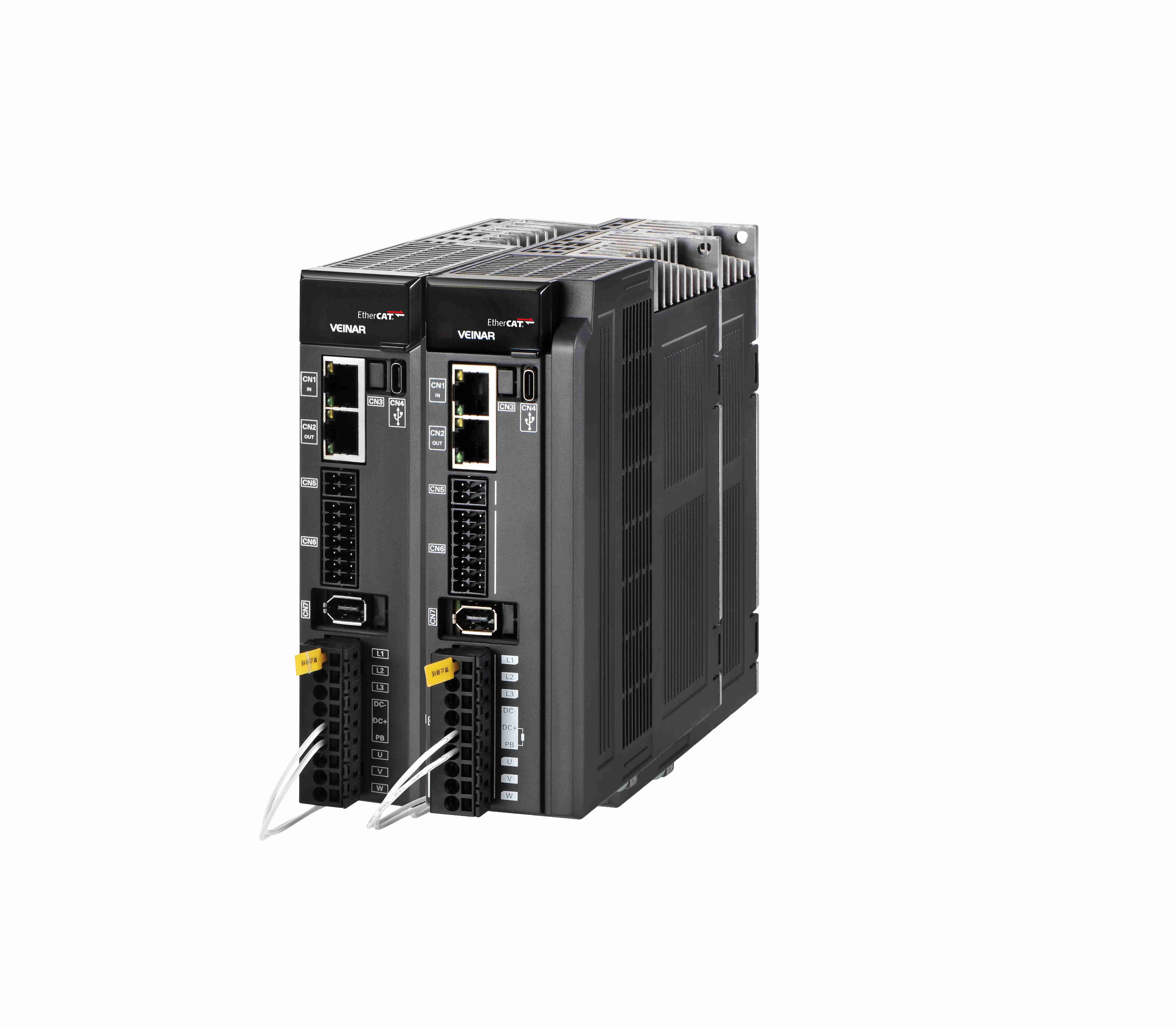
Overcoming systemic tracking inaccuracies demands an intelligent motion control foundation capable of executing high-frequency corrections. Modern automated production systems increasingly leverage advanced multi-axis servo configurations and deterministic communication protocols such as EtherCAT and Profinet to govern web transport with microsecond precision. By integrating a sophisticated multi-axis servo control philosophy originally optimized for high-demand synchronization tasks, the central controller maintains absolute coordination across all feeding and cutting axes. High-resolution optical encoders feed continuous position telemetry into advanced vector loops, allowing the system to instantly counteract torque ripple, smooth out transitional web velocities, and stabilize material tension against micro-vibrations during rapid cycles. This tight loop integration eliminates traditional mechanical lag and ensures that cutting tools strike the web precisely on target.
Implementing the 1000-Point Volumetric Mapping Framework
To systematically neutralize non-linear kinematic errors, thermal drift, and mechanical backlash, high-end production facilities deploy a comprehensive 1000-point accuracy compensation framework. Field specialists utilize high-accuracy laser measurement systems and optical sensors to map the entire operational envelope across thousands of discrete coordinate points under varying load and temperature conditions. The resulting distortion matrix models mechanical deflection, pulley eccentricity, and temperature-dependent expansion vectors across the complete mechanical path. By embedding this extensive calibration dataset directly into the multi-axis servo drive firmware, the system computes real-time correction vectors on the fly, adjusting motor velocities dynamically before cutting tools engage the material. This closed-loop strategy effectively erases mechanical imperfections from the final output equation.
Translating Operational Precision into Lasting Commercial Value
Achieving uncompromising operational precision directly transforms organizational manufacturing stability and material yield. By eradicating registration drift and cutting deviations through advanced multi-axis volumetric compensation, industrial plants eliminate material waste, protect expensive tooling from premature wear, and ensure absolute compliance with strict quality standards. Highsense delivers mission-critical motion control solutions backed by decades of joint research and development expertise, offering robust manufacturing capabilities and reliable global supply chain services that empower industrial enterprises to scale confidently. Through continuous innovation in compact multi-axis drive architecture and engineering excellence, Highsense consistently drives automation performance forward, helping global manufacturers turn complex technical challenges into enduring competitive advantages.
Table of Contents
- High-Speed Web Handling and Precision Registration Realities
- The Root Causes of Material Drift and Mechanical Hysteresis
- Integrating Advanced Multi-Axis Servo Control Architectures
- Implementing the 1000-Point Volumetric Mapping Framework
- Translating Operational Precision into Lasting Commercial Value