
 EN
EN
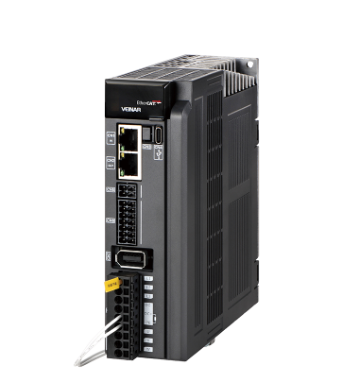
Evolution of Modern CNC Tool Changer Architectures
The global manufacturing sector constantly demands higher throughput, tighter tolerances, and minimized non-cutting downtime across increasingly complex machining workflows. Traditional computer numerical control machine centers relied heavily on mechanical cams, pneumatic cylinders, and decentralized single-axis motor controllers to execute automatic tool change sequences. While functional in basic low-mix shops, these legacy setups often suffered from severe mechanical wear, sluggish indexing speeds, and high maintenance overhead when executing rapid tool swaps in high-mix production environments. Field experience from senior retrofitting engineers consistently shows that mechanical cams drift out of alignment over thousands of continuous cycles. The integration of modern motion control has fundamentally transformed how tool magazines and mechanical arm assemblies operate. By harnessing an advanced 3d printing multiaxis servo control philosophy originally proven in high-speed additive manufacturing and precision positioning platforms, modern CNC tool changer systems now achieve unprecedented levels of synchronization, reliability, and positioning agility.
Synchronous Electronic Gearing Overcoming Mechanical Latency
The first major advantage of deploying modern multi-axis servo technology within CNC tool changers is the elimination of mechanical latency through synchronous electronic gearing. In legacy changer designs, moving a tool carousel while simultaneously articulating the transfer arm required complex mechanical linkages, Maltese crosses, and mechanical clutches that inherently introduced physical play and timing delays. Modern multi-axis servo architectures replace physical gear trains with high-bandwidth digital communication buses such as EtherCAT and Profinet. According to industrial automation research published by leading motion control institutes, deterministic fieldbus protocols allow central controllers to coordinate magazine drum rotation and transfer arm trajectories with microsecond precision. By synchronizing multiple motor axes electronically, tool change cycles are streamlined dramatically, minimizing non-cutting downtime and maximizing overall spindle utilization in automated milling centers.
Real-Time Torque Regulation and Intelligent Jam Protection
Protecting expensive mechanical components from mechanical jams or tool holder misalignment is a critical engineering priority during tool retrieval sequences. Traditional pneumatic and open-loop motor changers lack real-time feedback, meaning that if a tool holder jams slightly in the spindle taper, the system continues applying raw force until a shear pin breaks or an electric motor stalls. Advanced multi-axis servo drives incorporate real-time current monitoring and adaptive torque limitation algorithms. If an obstruction or slight mechanical binding occurs during the tool extraction phase, the servo drive instantly detects the micro-surge in electrical current and halts or reverses motion within milliseconds. This intelligent torque regulation safeguards internal gearboxes, prevents spindle taper damage, and significantly extends the operational lifespan of the entire tool exchange assembly without requiring manual resets.
Consolidated Modular Footprint and Streamlined Machine Integration
Space constraints inside the machinery enclosure and the complexity of wiring harnesses historically posed major headaches for machine tool builders. Traditional multi-drive cabinets required separate standalone amplifiers, extensive analog cabling, and cumbersome discrete wiring for every individual motion axis, creating maintenance bottlenecks and noise vulnerabilities. Modern multi-axis servo solutions consolidate multiple drive channels into a single, compact power chassis. This modular design drastically reduces the physical footprint within the electrical cabinet, simplifies internal cable routing, and minimizes electromagnetic interference across sensitive signal lines. Furthermore, universal encoder compatibility and programmable software interfaces allow engineers to configure complex kinematic profiles quickly, adapting the tool changer to diverse magazine capacities and heavy tool weights without undergoing major hardware overhauls.
Translating Motion Control Innovation into Measurable Industrial Value
The successful reconstruction of CNC tool changer systems through advanced multi-axis servo technology highlights a broader industry shift toward intelligent, highly responsive manufacturing hardware. By combining lightning-fast synchronization, adaptive torque protection, and space-saving modular design, industrial enterprises can eliminate traditional bottlenecks and achieve superior operational workflows. Highsense delivers mission-critical motion control solutions backed by decades of joint research and development expertise, offering robust manufacturing capabilities and reliable global supply chain services that empower industrial enterprises to scale confidently. Through continuous innovation in compact multi-axis drive architecture and engineering excellence, Highsense consistently drives automation performance forward, helping global manufacturers turn complex technical challenges into enduring competitive advantages.
Table of Contents
- Evolution of Modern CNC Tool Changer Architectures
- Synchronous Electronic Gearing Overcoming Mechanical Latency
- Real-Time Torque Regulation and Intelligent Jam Protection
- Consolidated Modular Footprint and Streamlined Machine Integration
- Translating Motion Control Innovation into Measurable Industrial Value