Unveiling the Precision of Linear Motor-Driven SLA Stereolithography
Introduction
The Convergence of SLA and Linear Motors
Stereolithography (SLA) is a widely - used 3D printing technology that builds 3D objects layer by layer. In the SLA process, a liquid photopolymer resin is cured by a UV light source according to the cross - sectional patterns of the object. This process has extremely strict requirements for motion precision and stability. Any tiny deviation in the movement of the resin tank or the curing light source can lead to inaccuracies in the curing of each resin layer, which in turn affects the final quality and accuracy of the 3D - printed object.
This is where direct drive linear motors come into play. A direct drive linear motor directly controls the relative movement between the resin tank and the curing light source. Different from traditional motors with complex transmission mechanisms, direct drive linear motors eliminate the issue of transmission backlash. In traditional systems with components like belts, gears, or screws, there is always some play or backlash in the transmission, which can cause errors in positioning. But direct drive linear motors, by directly driving the moving parts, ensure that the curing light source can accurately scan each layer of the resin, enabling the precise curing of each resin layer. This is crucial for SLA, as it allows for the perfect reproduction of micro - details in 3D - printed items.
Significance in Modern Manufacturing
In modern manufacturing, especially in fields that demand high precision and the reproduction of micro - details, such as jewelry manufacturing, dental model production, and micro - mechanical parts manufacturing, the combination of SLA and direct drive linear motors is of great significance.
For jewelry manufacturing, the ability to reproduce intricate patterns and fine details is essential. A small imperfection or deviation in the design can significantly affect the aesthetics and value of the jewelry. With the high - precision motion control provided by direct drive linear motors in SLA, jewelers can create highly detailed 3D - printed wax models, which can then be used in the casting process to produce exquisite jewelry pieces.
In the dental industry, dental models need to accurately represent the patient's teeth and oral structure. Even a slight error in the model can lead to ill - fitting dental restorations or orthodontic appliances. The high - stability and precision of SLA with direct drive linear motors ensure that dental models can be produced with extremely high accuracy, providing a reliable basis for dental diagnosis and treatment planning.
For micro - mechanical parts, their small size and complex structures require manufacturing techniques with ultra - high precision. The SLA process driven by direct drive linear motors can meet these requirements, enabling the production of micro - mechanical parts with precise dimensions and complex geometries, which are widely used in aerospace, electronics, and medical devices.
Understanding SLA Stereolithography
Basics of SLA Process
SLA stereolithography is a revolutionary 3D printing technology that operates on the principle of photopolymerization. The process begins with a CAD (Computer - Aided Design) model of the object to be printed. This 3D model is then sliced into numerous thin cross - sectional layers by specialized software.
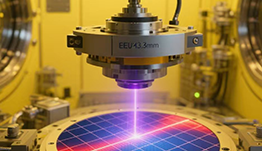
In the SLA machine, a resin tank is filled with a liquid photopolymer resin, which is sensitive to ultraviolet (UV) light. A high - precision curing light source, often a UV laser, is used to selectively cure the resin layer by layer. When the UV light hits the resin, it initiates a chemical reaction called photopolymerization. In this reaction, the monomers in the resin link together to form long polymer chains, transforming the liquid resin into a solid state.
For each layer, the laser beam traces the cross - sectional pattern of the object onto the surface of the resin. As the laser moves, it cures the resin in the specific areas defined by the model's cross - section. Once one layer is completely cured, the printing platform either moves down (in some SLA setups) or the resin tank moves up (in other configurations) by a distance equal to the thickness of a single layer. A new layer of liquid resin then covers the previously cured layer, and the laser proceeds to cure the next layer. This process is repeated layer by layer until the entire 3D object is constructed. After the printing is complete, the object is removed from the resin tank, and any remaining uncured resin is typically washed off using a suitable solvent. The printed object may also undergo a post - curing process, usually under intense UV light, to enhance its mechanical properties and ensure complete polymerization.
Traditional Challenges in SLA
In traditional SLA systems, several challenges are associated with the motion control and overall performance of the equipment.
One of the primary issues is motion precision. The relative movement between the resin tank and the curing light source is critical for accurate layer - by - layer curing. In traditional setups, mechanical components such as belts, gears, and screws are often used to transfer motion from the motor to the moving parts. However, these components introduce transmission backlash. Transmission backlash refers to the small amount of play or clearance between the teeth of gears or in the threads of screws. This backlash can cause the curing light source to deviate from its intended path during scanning, resulting in inaccuracies in the curing of each resin layer. For example, in a complex dental model with fine details, even a tiny deviation of a few microns due to transmission backlash can lead to incorrect reproduction of the tooth structure, making the model unsuitable for dental applications.
Stability is another significant challenge. The movement of the resin tank and the curing light source needs to be extremely stable to ensure consistent curing across all layers. Vibrations and fluctuations in the motion can occur due to various factors such as the mechanical resonance of the moving components, the unevenness of the mechanical drive system, or external disturbances. These vibrations can cause the laser beam to waver during curing, leading to inconsistent curing depths and surface roughness in the printed object. In jewelry manufacturing, where smooth and flawless surfaces are highly desired, such vibrations can ruin the aesthetics of the 3D - printed wax models, which are later used for casting precious metals.
Moreover, the wear and tear of traditional mechanical components over time can further exacerbate these problems. As belts stretch, gears wear out, and screws become loose, the motion precision and stability of the SLA system degrade, reducing the quality and reliability of the printed products. This not only increases the production cost due to higher failure rates but also limits the applications of SLA technology in industries that demand high - precision and high - stability manufacturing processes.
The Magic of Direct Drive Linear Motors
Working Principle of Linear Motors
A direct drive linear motor is a remarkable device that directly converts electrical energy into linear motion mechanical energy without the need for intermediate conversion mechanisms such as belts, gears, or screws. Its working principle is closely related to that of a rotary motor. In fact, a linear motor can be thought of as a rotary motor that has been radially cut open and its circumference flattened into a straight line.
In a linear motor, the part evolved from the stator of a rotary motor is called the primary, and the part evolved from the rotor is called the secondary. For instance, in a linear induction motor, when an alternating - current power source is connected to the primary winding, a traveling - wave magnetic field is generated in the air gap. As the secondary is cut by this traveling - wave magnetic field, an electromotive force is induced in the secondary, and a current is generated. This current interacts with the magnetic field in the air gap, resulting in an electromagnetic thrust. If the primary is fixed, the secondary will move linearly under the action of this thrust; conversely, if the secondary is fixed, the primary will move. This direct - conversion mechanism allows for a more straightforward and efficient way of achieving linear motion, which is crucial for applications that require high - precision and high - speed linear movement, such as in the SLA stereolithography process.
Why Direct Drive?
Direct drive in linear motors offers several significant advantages over traditional indirect drive methods, especially in the context of SLA stereolithography.
Elimination of Transmission Backlash: One of the most prominent benefits is the elimination of transmission backlash. In traditional drive systems that use components like belts, gears, or screws to transfer motion, there is always some play or clearance between the mechanical parts. For example, in a gear - based transmission, the teeth of the gears do not mesh perfectly, leaving a small amount of space between them. This backlash can cause the moving parts to deviate from their intended positions, leading to inaccuracies in the SLA process. In contrast, direct drive linear motors directly drive the moving components, such as the resin tank or the curing light source in SLA. Since there are no intermediate mechanical components with play, the relative movement between the resin tank and the curing light source can be precisely controlled. This ensures that each resin layer is cured exactly according to the designed pattern, enabling the reproduction of micro - details with high accuracy.
High - Speed and High - Acceleration Capabilities: Direct drive linear motors also have the advantage of high - speed and high - acceleration capabilities. Due to their simple structure and the absence of complex mechanical transmission components, they can achieve rapid acceleration and high - speed operation. In SLA, this is beneficial for the printing platform to achieve rapid demolding. The low mover inertia of linear motors allows the platform to quickly move away from the cured resin layer, reducing the time that the resin adheres to the platform. This helps to minimize model defects caused by resin adhesion, such as tearing or distortion of the cured layers.
High Precision and Repeatability: Another advantage is the high precision and repeatability of direct drive linear motors. They can achieve extremely accurate positioning, and when combined with a magnetic scale, the repeat positioning accuracy can reach 0.5 - 2 μm. This high - level precision ensures that the SLA system can produce consistent and accurate 3D - printed objects layer after layer. In applications like jewelry manufacturing and dental model production, where the replication of fine details and accurate dimensions is crucial, this high - precision motion control provided by direct drive linear motors is essential.
Stable Motion Output: The motion output of direct drive linear motors is very stable. They can avoid the curing deviations caused by equipment vibration that are often present in traditional drive systems. In SLA, stable motion is necessary to ensure that the laser beam accurately cures the resin layers without any fluctuations or wavering. This stability contributes to the high - quality surface finish and dimensional accuracy of the 3D - printed objects. Additionally, the wear - free design of linear motors (since there are no rubbing mechanical parts like in traditional drives) extends the lifespan of the equipment. This reduces the need for frequent maintenance and replacement of components, providing reliable support for continuous batch printing in industrial production settings.
How Linear Motors Revolutionize SLA
Precision in Micro - details Reproduction
The direct drive linear motor plays a crucial role in ensuring the precise curing of each resin layer in the SLA process, thereby enabling the perfect reproduction of micro - details. In traditional SLA systems with complex transmission mechanisms, the presence of transmission backlash makes it difficult to achieve high - precision movement control. However, direct drive linear motors directly act on the moving parts, eliminating this problem.
For example, in jewelry manufacturing, there are often elaborate patterns such as delicate filigree work or tiny gem - setting details. With a direct drive linear motor - driven SLA system, these intricate patterns can be accurately replicated in the 3D - printed wax models. Each curve and corner of the pattern can be precisely cured, ensuring that the final jewelry product has a high - quality and exquisite appearance.
In the production of dental models, the accuracy of micro - details is also of utmost importance. The grooves, pits, and cusps on the teeth need to be reproduced accurately. The high - precision control of the direct drive linear motor allows the SLA system to cure the resin layer by layer according to the precise dental model data, resulting in dental models that can accurately reflect the patient's oral structure, which is essential for accurate dental diagnosis and treatment planning.
Stability and Reduced Deviations
The low mover inertia and fast response speed of direct drive linear motors contribute significantly to reducing model defects and avoiding curing deviations.
Due to the low mover inertia, the printing platform can quickly and smoothly move during the demolding process. When the resin layer is cured, the platform can rapidly separate from the resin, minimizing the time that the resin adheres to the platform. This effectively reduces the risk of model defects caused by resin adhesion, such as tearing or distortion of the cured layers. For instance, in the production of small - scale 3D - printed parts with thin - walled structures, if the demolding is not fast enough, the resin may stick to the platform and cause the thin - walled parts to deform. But with the fast - response direct drive linear motor, such problems can be greatly alleviated.
Moreover, the stable motion output of direct drive linear motors is crucial for avoiding curing deviations caused by equipment vibration. In traditional SLA setups, vibrations from mechanical components or external sources can cause the curing light source to deviate from its intended path, resulting in inconsistent curing depths and surface roughness. However, the stable motion of direct drive linear motors ensures that the laser beam accurately cures the resin layers without fluctuations or wavering. This stable curing process contributes to the high - quality surface finish and dimensional accuracy of the 3D - printed objects. For example, in the manufacturing of micro - mechanical parts with high - precision surface requirements, the stable motion of the linear motor - driven SLA system can ensure that the surface roughness of the parts meets the strict requirements.
High - Precision Positioning
When combined with a magnetic scale, direct drive linear motors can achieve a repeat positioning accuracy of 0.5 - 2 μm. This high - precision positioning capability is essential for applications that demand extremely high accuracy.
In SLA, accurate positioning of the resin tank and the curing light source is crucial for the precise curing of each layer. The high - precision positioning provided by direct drive linear motors ensures that the laser beam can accurately trace the cross - sectional patterns of the object on the resin surface. For example, in the production of micro - optical components, the precise positioning of the linear motor allows for the accurate curing of complex optical structures with sub - micron tolerances. These micro - optical components often have intricate shapes and high - precision requirements for refractive indexes and surface smoothness. The high - precision positioning of the direct drive linear motor - driven SLA system enables the production of such components with high accuracy, meeting the strict requirements of the optical industry.
Extended Equipment Lifespan and Low Maintenance
The wear - free design of direct drive linear motors is a significant advantage in terms of extending equipment lifespan. Unlike traditional mechanical drive components such as belts, gears, and screws that are subject to wear and tear during operation, direct drive linear motors have no rubbing mechanical parts. This means that there is no degradation in performance due to component wear over time.
In continuous batch printing operations, the low - maintenance feature of direct drive linear motors provides reliable support. Since there is no need to frequently replace worn - out components, the downtime of the SLA equipment is significantly reduced. For example, in an industrial production environment where large - scale 3D - printed parts are produced continuously, the long - lifespan and low - maintenance characteristics of the direct drive linear motor - driven SLA system ensure the smooth progress of production. This not only improves production efficiency but also reduces the overall production cost, as less time and resources are spent on equipment maintenance and component replacement.
Applications and Success Stories
In the Jewelry Industry
In the jewelry industry, the demand for intricate and unique designs is ever - increasing. Consumers today are not only looking for beautiful jewelry but also for pieces that showcase exceptional craftsmanship and individuality. This is where the linear motor - driven SLA stereolithography comes in.
For example, in the creation of engagement rings, there are often elaborate settings for diamonds or other precious gemstones. These settings may have delicate prongs, filigree patterns, or hidden details that require extremely high - precision manufacturing. With a linear motor - driven SLA system, jewelers can accurately reproduce these complex designs in 3D - printed wax models. The direct drive linear motor ensures that every curve and angle of the design is precisely translated into the wax model, allowing for the production of engagement rings with flawless settings.
Another application is in the production of high - end necklaces with detailed pendants. These pendants may feature complex floral patterns, animal motifs, or geometric designs. The high - precision motion control provided by the direct drive linear motor enables the SLA system to cure the resin layer by layer, accurately replicating these intricate patterns. The result is a 3D - printed wax pendant that can be used as a mold for casting precious metals, resulting in a high - quality and unique necklace pendant.
Dental Applications
In the dental field, accuracy is of utmost importance. Dental models serve as a crucial tool for dentists in diagnosis, treatment planning, and the fabrication of dental restorations and orthodontic appliances.
For instance, when creating dental crowns, the dental model needs to accurately represent the shape and size of the patient's tooth. A linear motor - driven SLA system can produce dental models with a high level of precision. The direct drive linear motor ensures that the resin is cured precisely according to the digital dental model data, reproducing the fine details of the tooth structure, such as the grooves, pits, and cusps. This accurate dental model serves as a reliable basis for the fabrication of dental crowns that fit the patient's tooth perfectly.
In orthodontics, the production of clear aligners also benefits greatly from linear motor - driven SLA stereolithography. Clear aligners are custom - made plastic trays that gradually move the teeth into their desired positions. To ensure the effectiveness of the treatment, the aligners must fit the patient's teeth precisely. The high - precision dental models produced by the linear motor - driven SLA system allow for the accurate manufacturing of clear aligners. The direct drive linear motor enables the SLA system to create models with consistent and accurate dimensions, resulting in clear aligners that provide a comfortable fit for the patient and effectively correct dental misalignments.
Conclusion
Recap of Key Benefits
In summary, linear motor - driven SLA stereolithography offers a multitude of significant benefits. In terms of precision, the direct control of the relative movement between the resin tank and the curing light source by direct drive linear motors eliminates transmission backlash, enabling the perfect reproduction of micro - details in small - scale items such as jewelry and dental models. Each resin layer can be cured with high accuracy, ensuring that the final product closely adheres to the original design.
Regarding stability, the low mover inertia and fast response speed of linear motors allow for rapid demolding of the printing platform, reducing model defects caused by resin adhesion. The stable motion output also effectively avoids curing deviations caused by equipment vibration, contributing to high - quality surface finishes and dimensional accuracy of the 3D - printed objects.
In addition, the high - precision positioning achieved when linear motors are combined with magnetic scales, with a repeat positioning accuracy of 0.5 - 2 μm, meets the stringent requirements of high - precision manufacturing. Moreover, the wear - free design of linear motors extends the lifespan of the equipment, and the low - maintenance feature provides reliable support for continuous batch printing, reducing production costs and downtime.
Future Prospects
Looking ahead, the future of linear motor - driven SLA stereolithography in the manufacturing industry appears highly promising. As technology continues to advance, we can expect further improvements in the precision and speed of this technology. This will enable the production of even more complex and high - precision components, expanding its applications in industries such as aerospace, micro - electronics, and medical device manufacturing.
In the aerospace industry, the ability to produce lightweight and high - strength components with complex geometries through linear motor - driven SLA could revolutionize aircraft design and manufacturing. In micro - electronics, the technology could be used to fabricate ultra - small and high - precision electronic components, meeting the ever - increasing demand for miniaturization. In the medical device field, it may contribute to the development of more personalized and high - precision medical implants and surgical tools.
Furthermore, as the cost of linear motors and related technologies continues to decline, linear motor - driven SLA stereolithography is likely to become more accessible and widespread, driving innovation and productivity improvements across various manufacturing sectors.

 EN
EN
 Hot News