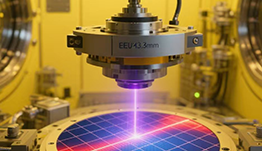
Photovoltaic (PV) wafer handling is a critical link in solar cell manufacturing, where the fragility of silicon wafers (often only hundreds of micrometers thick) demands extreme precision and gentleness. Even minor vibrations, imprecise movements, or operational disruptions can lead to wafer breakage, directly affecting production yields and increasing costs. Linear servo drive integrated with PROFINET technology has emerged as a game-changer in this field. By combining nanometer-level motion control, high-reliability communication, and low-vibration operation, it addresses the core pain points of PV wafer handling, slashing breakage rates and boosting overall production efficiency. Let’s explore how this advanced solution transforms the PV manufacturing process.
Nanometer-Level Micro-Step Control: Minimize Gripping Damage
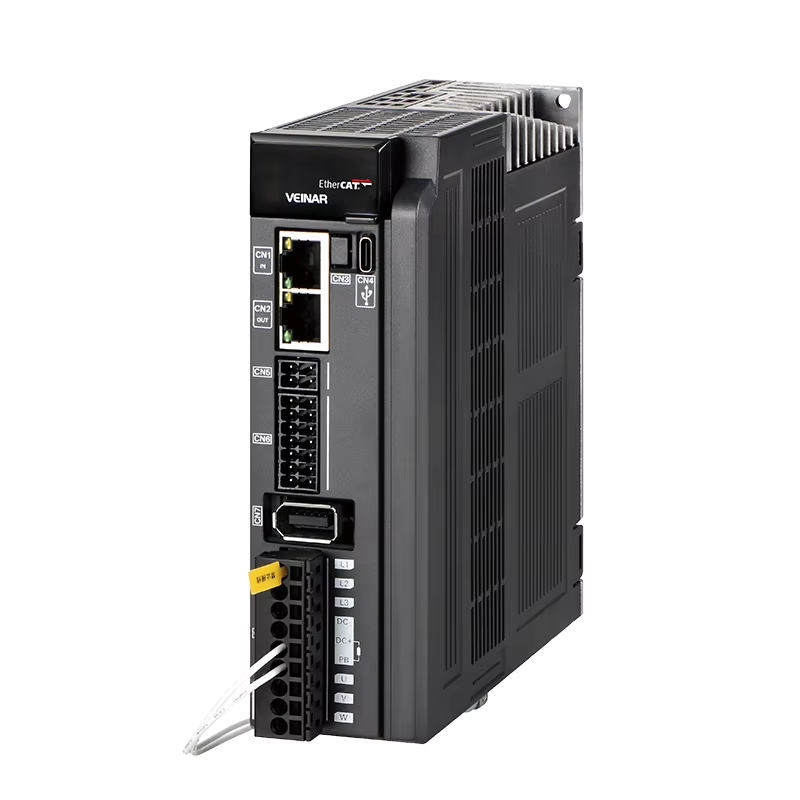
The primary cause of PV wafer breakage lies in inaccurate or unsmooth handling movements. Linear servo drive equipped with PROFINET technology resolves this with nanometer-level micro-step control, ensuring every gripping and transferring action is gentle and precise. This level of control is made possible by the drive’s hard real-time current loop—boasting a 625kHz sampling frequency and 3300Hz current loop bandwidth—which captures and adjusts motion parameters in an instant.
Unlike traditional drives that may cause abrupt starts or stops, the linear servo drive’s model-based feedforward control (including friction compensation) predicts and offsets potential mechanical deviations. This results in smooth, jerk-free movement when gripping wafers, eliminating the risk of breakage due to sudden force or uneven pressure. As highlighted in industry practice, this precise control lowers wafer breakage rates from 0.3% to a mere 0.05%—a significant reduction that translates to substantial cost savings for high-volume PV manufacturers. The drive’s compatibility with PROFINET’s RT/IRT synchronization further ensures that multiple handling axes operate in perfect harmony, avoiding misalignment that could damage wafers during transfer between stations.
Ring Topology and High Reliability: Ensure Continuous Stable Operation
Operational interruptions or equipment failures during PV wafer handling can lead to accidental collisions or improper positioning, increasing breakage risks. Linear servo drive adopts a ring topology design that supports up to 32 devices, ensuring robust data transmission and system redundancy. Even if one node experiences a temporary issue, the ring structure maintains communication continuity, preventing production halts and minimizing the chance of wafer damage caused by unexpected shutdowns.
This reliability is further enhanced by the drive’s multi-protocol support (including PROFINET, EtherCAT, and Modbus) and compatibility with mainstream master stations such as S7-1500/1200 and 200Smart. It seamlessly integrates into existing PV manufacturing lines, eliminating communication bottlenecks that could disrupt motion precision. With this stable operation, the overall line availability reaches 98%, ensuring consistent, uninterrupted handling that protects wafers from damage associated with system instability. The drive’s robust construction—designed for industrial environments—and 18-month warranty also provide long-term reliability, reducing maintenance-related downtime and breakage risks.
OPC UA Protocol: Full Traceability Meets Industry Standards
Quality control and traceability are non-negotiable in PV manufacturing, as even minor defects in wafers can impact solar cell performance. Linear servo drive integrated with PROFINET technology supports the OPC UA protocol, enabling real-time upload of operational data—including motion parameters, grip force, transfer speed, and equipment status—to the central control system. This full traceability covers every step of wafer handling, allowing manufacturers to track and analyze each wafer’s processing history.
Should a quality issue arise, the traceability data helps quickly identify the root cause (e.g., abnormal motion parameters or equipment deviations) without affecting the entire production line. This proactive quality management aligns with strict PV industry standards, ensuring that only intact, high-quality wafers move to subsequent processing stages. Complemented by the manufacturer’s rigorous quality control processes—including incoming material inspection (IQC), production inspection, and outgoing testing—the drive’s data-driven traceability further reduces breakage by enabling timely adjustments to handling parameters before defects occur.
Low-Vibration Operation: Protect Wafer Surfaces and Boost Conversion Efficiency
PV wafer surfaces are highly sensitive to scratches or micro-damage, which can reduce solar cell conversion efficiency by disrupting light absorption and electron flow. Linear servo drive addresses this with advanced vibration suppression capabilities, including high-frequency vibration suppression and low-frequency end-point jitter suppression. These features minimize mechanical vibrations during handling, ensuring the wafer surface remains intact and free from micro-defects.
The drive’s friction compensation function also plays a key role in reducing vibration. By dynamically adjusting for mechanical friction, it maintains smooth motion even at low speeds, avoiding the “stick-slip” effect that can cause micro-vibrations. As a result, not only is wafer breakage reduced, but the integrity of the wafer surface is preserved, boosting solar cell conversion efficiency by 0.5%—a meaningful improvement in PV product performance. The drive’s compact footprint and flat installation design further contribute to stable operation by reducing spatial constraints and mechanical interference in tight manufacturing environments.

 EN
EN
 Hot News