
 EN
EN
The One-Clamping Imperative: Eliminating Tolerance Stack-Up and Repositioning Errors
How single-setup multi-surface machining prevents cumulative dimensional drift
Every time a workpiece is clamped, machined, unclamped, and re-fixtured, the original datum is lost. Feature-to-feature accuracy degrades because each new setup introduces its own positioning uncertainty — turning what should be a controlled tolerance into a cumulative sum of deviations known as tolerance stack-up. In traditional 3-axis, multi-setup workflows, achieving tight overall tolerances forces unrealistically narrow allowances at each step, inflating cost and scrap rates.
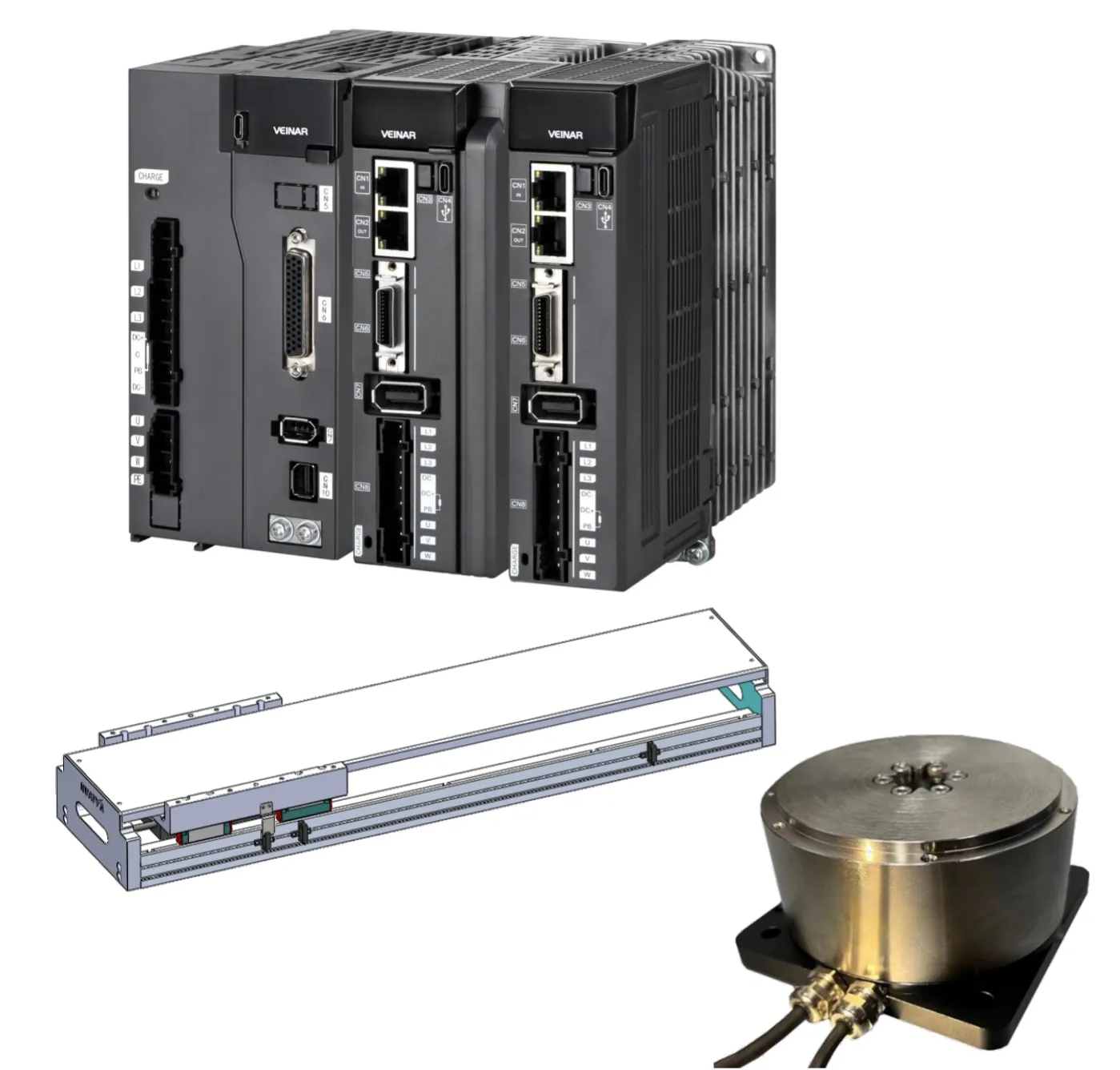
One-clamping, multi-surface machining on a 5-axis platform eliminates this drift entirely. By machining all critical faces and features in a single clamping, every dimension references the same zero point. The part never leaves the workholding — so the only remaining variation is the machine’s inherent volumetric accuracy. High-precision CNC direct servo technology further stabilises the process: rotary axes maintain exact angular positioning without mechanical backlash, ensuring complex contours remain true to the original coordinate system. The result is a fundamental reduction in positional randomness — and a capability to hold geometric relationships that multi-setup processes simply cannot match.
Empirical validation: 42% average reduction in positional error vs. 3-axis multi-setup workflows (Sandvik Coromant, 2023)
Quantitative testing confirms the advantage. A controlled trial by Sandvik Coromant in 2023 compared positional accuracy of identical prismatic features produced on a 3-axis machine with three separate setups versus a single 5-axis clamping strategy. The multi-setup batch showed a mean positional deviation of ±0.048 mm; the one-clamping group averaged ±0.028 mm — a 42% reduction. Crucially, the spread of measured values narrowed by over half, indicating not just higher accuracy but significantly improved repeatability. Fixture-related alignment errors alone accounted for roughly 60% of total variability in the 3-axis workflow. These findings affirm that one-clamping is not a marginal gain, but a foundational shift in precision capability — especially when paired with direct servo-driven rotary axes that lock the part in a rigid, thermally stable loop.
Simultaneous 5-Axis Machining with Direct Servo Motion for High-Precision CNC Contouring
How direct servo-driven rotary axes enable true simultaneous motion and micron-level path fidelity
Simultaneous 5-axis machining demands continuous, coordinated motion of all five axes to follow complex 3D toolpaths — requiring rotary axes that respond instantly, without mechanical play. Direct servo-driven rotary axes meet this need by coupling the motor directly to the rotary table or spindle head, eliminating gears, belts, and worm drives. This architecture delivers zero backlash, high torsional stiffness, and exceptional dynamic response — enabling rapid acceleration and deceleration while preserving angular accuracy. High-precision systems resolve angular increments of 0.001° or finer, allowing smooth tracking of intricate contours without dwell marks or surface imperfections. The result is true 5-axis interpolation, where the tool centre point stays within a few microns of the programmed path — even during high-feed-rate, multi-axis moves. This fidelity is essential for freeform surfaces like impellers, blisks, and mould cavities, where deviations directly compromise performance.
Case study: Turbine blade root profiling — surface deviation reduced from ±0.042 mm (3+2) to ±0.011 mm (simultaneous)
A 2023 case study on turbine blade root profiling illustrates the practical impact. The fir-tree root geometry requires precise contouring of multiple angled surfaces — traditionally addressed via several setups in 3+2 mode. Repositioning introduced cumulative errors, yielding an average surface deviation of ±0.042 mm. When machined in a single clamping on a simultaneous 5-axis machine with direct servo-driven rotary axes, deviation dropped to ±0.011 mm — a 74% improvement. This eliminated hand finishing and ensured consistent blade-to-disc fit. Micron-level accuracy was achieved by maintaining optimal tool orientation throughout the entire root profile — a capability only possible with true simultaneous motion and high-precision direct servo control.
Machine Architecture Optimization: Trunnion, Swivel-Head, and Hybrid Designs for Complex Part Access
Geometric envelope analysis: Why trunnion tables excel in deep cavities and negative-angle features
The trunnion-type 5-axis architecture tilts the workpiece along two rotary axes, expanding the tool’s geometric envelope significantly. By rotating the part into optimal orientation, the spindle reaches deep cavities and negative-angle features that would otherwise demand long, chatter-prone tool extensions or additional setups. This minimises stick-out and maximises rigidity. When paired with high-precision CNC direct servo drives, trunnion tables maintain micron-level path fidelity even during inclined cuts. The kinematic chain keeps the tool vector nearly perpendicular to the surface — reducing deflection and improving finish. Unlike swivel-head designs, which often encounter interference in confined pockets, the trunnion configuration consistently delivers the clearance needed for complex, multi-faced parts — all in a single clamping.
Industry-Specific ROI of One-Setup Machining in Aerospace, Medical, and Mold & Die Manufacturing
Aerospace bracket example: 7 setups → 1 clamping; cycle time ↓63%, inspection labor ↓78%
Aerospace bracket production traditionally required up to seven separate setups — each introducing repositioning errors and alignment checks. Switching to a single-clamping 5-axis machining center with high-precision CNC direct servo drives eliminated cumulative tolerance stack-up entirely. The result: cycle time fell by 63% and inspection labor dropped by 78%, as the full geometry — including deep pockets and angled holes — was completed in one continuous operation. Direct servo rotary axes maintained micron-level path fidelity throughout simultaneous machining, ensuring consistent quality without iterative re-fixturing. This dramatic reduction in touch labor and inspection accelerates throughput and aligns with AS9100D quality requirements, where reduced human intervention correlates directly with fewer defects. For aerospace OEMs, consolidating multiple setups into one clamping translates into measurable cost savings and faster time-to-certification.
FAQ
What is tolerance stack-up?
Tolerance stack-up refers to the cumulative dimensional drift resulting from repositioning errors in multi-setup manufacturing processes. Each clamping introduces new uncertainties, degrading feature-to-feature accuracy.
How does one-clamping machining eliminate tolerance stack-up?
One-clamping machining references all critical dimensions to the same zero point, ensuring precision by preventing cumulative errors associated with multiple setups.
Why are direct servo-driven rotary axes essential for simultaneous 5-axis machining?
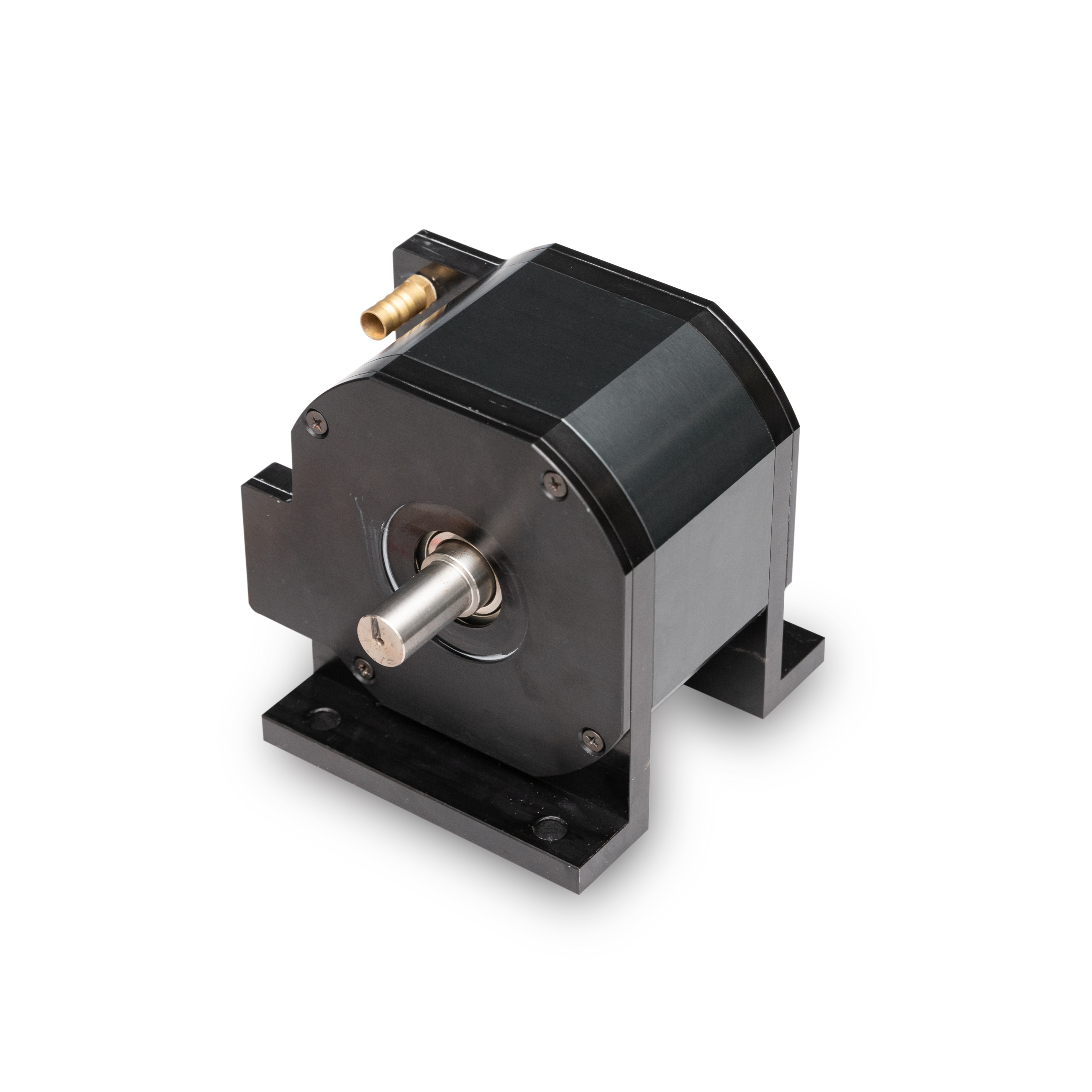
Direct servo-driven rotary axes eliminate mechanical play, ensuring zero backlash and high dynamic response for micron-level path fidelity, which is critical for complex 3D toolpaths.
What industries benefit most from one-setup machining?
Industries such as aerospace, medical device manufacturing, and mold & die production benefit greatly due to the precision, reduced labor, and cycle times offered by one-setup machining.
How does trunnion architecture improve machining accessibility?
Trunnion tables allow optimal part orientation for accessing deep cavities and negative-angle features with maximum rigidity and path fidelity.
Table of Contents
- The One-Clamping Imperative: Eliminating Tolerance Stack-Up and Repositioning Errors
- Simultaneous 5-Axis Machining with Direct Servo Motion for High-Precision CNC Contouring
- Machine Architecture Optimization: Trunnion, Swivel-Head, and Hybrid Designs for Complex Part Access
- Industry-Specific ROI of One-Setup Machining in Aerospace, Medical, and Mold & Die Manufacturing
- FAQ