
 EN
EN

The Hidden Cost of Single-Axis Drive Fragmentation
How timing drift across isolated drives triggers cascading downtime
Single axis drives operating independently don't have those synchronized timing features we need for proper coordination. These tiny clock differences at the microsecond level build up over time, leading to gradual misalignment across different axes. If one drive falls behind schedule, then all the equipment further down the line gets stuff at the wrong time, which often triggers those emergency stop buttons throughout the production chain. And when there's a stoppage, it doesn't just affect one spot. Take a 3 millisecond delay at the filling station? That can bring eight packaging units to a standstill waiting for their turn. Restarting everything after such incidents takes anywhere from four to nine whole minutes just to get things back online safely. Bottling facilities especially suffer from this kind of setup, facing between seventeen and thirty-four unexpected shutdowns each work shift according to Packaging Digest from last year. The bottom line is pretty clear: without some sort of unified timing system in place, those small timing issues keep getting worse until they eat away at productivity in ways no one expects.
Real-world impact: 12.7% yield loss in high-speed packaging due to axis desynchronization
The real money drain in pharmaceutical blister packaging comes when things get out of sync. If the thermoforming, filling, and sealing processes aren't properly aligned, products often miss their marks during transfer, leading to all sorts of problems like misfeeds and failed seals. Looking at data from about 120 different high speed production lines shows we're talking roughly 12.7% lost output on average. Consider what happens at 300 parts per minute operation: even a small 1% drift between axes means around 2,200 faulty units getting tossed every single hour. And this isn't just about waste either. The machines need constant resetting whenever they jam, which eats into valuable production time. All these headaches come back to old fashioned drive systems that can't coordinate multiple movements together. That's why so many smart manufacturers have switched to multi-axis servo setups for their packaging needs these days.
Multi-Axis Servo Control: Determinism, Coordination, and Architecture Consolidation
Sub-100 ns jitter via EtherCAT distributed clocks — benchmarked against CANopen and Profibus
The EtherCAT protocol gets its rock solid timing from those hardware based distributed clocks, clocking in at under 100 nanoseconds of jitter. That's way better than what we see from older fieldbus systems. Traditional options like CANopen and Profibus usually have around 1 to 10 microseconds of sync uncertainty. But with EtherCAT, those built in timestamps stop the whole system from drifting over time. And when it comes down to it, this kind of pinpoint accuracy makes all the difference for things like moving semiconductor wafers at high speeds. Even tiny errors measured in microseconds can really hurt production yields in these kinds of sensitive manufacturing processes.
Scalable synchronization across 32+ axes without master-slave bottlenecks
Today's manufacturing needs call for motion control systems that can scale easily without getting stuck at central processing points. The newer distributed multi-axis servo setups work differently than traditional ones. These systems sync up over 32 axes through direct communication between components instead of relying on a central controller with slaves following orders. Take EtherCAT for instance its ring network design lets machines talk to each other in cycles faster than 100 microseconds no matter how many nodes are connected. A car parts maker saw their production cycles cut down by almost two thirds when they switched 36 axes from old school PLC controlled drives to this new distributed approach. What makes these systems so attractive? They make adding new equipment straightforward while keeping operations predictable and reducing the headache usually associated with integrating complex machinery into existing setups.
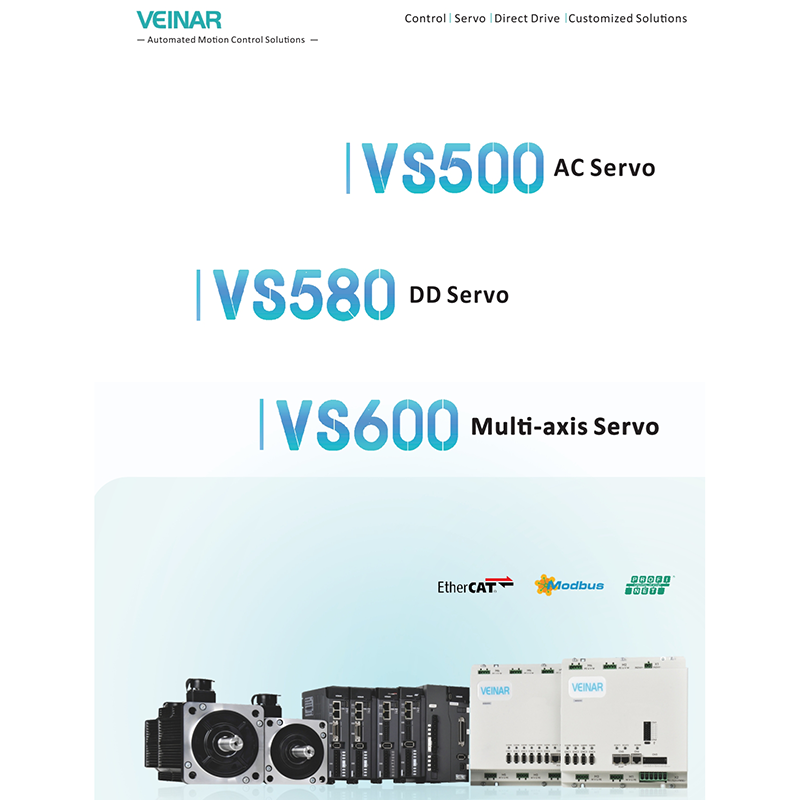
Faster, Leaner Upgrades: Reduced Integration Effort with Multi-Axis Servo Systems
68% fewer I/O modules and 40% shorter commissioning time (Rockwell/Beckhoff field data)
Real world tests at Rockwell Automation and Beckhoff show that when companies switch to integrated multi axis servo systems, the whole upgrade process becomes much easier. The new drive electronics basically remove those separate control cabinets, all the complicated wiring between components, and those extra input output modules we used to need everywhere. One plant saw their hardware inventory drop by almost two thirds after making the switch. Installers spend less time running around with meters and more time getting everything calibrated properly since they don't have to chase down timing issues between different axes anymore. What does this mean practically? Commissioning takes about 40% less time than before. That translates into quicker returns on investment for manufacturers and allows factories to get back online faster during critical maintenance periods or production overhauls.
Achieving System-Level Precision: Multi-Axis Servo Performance in Critical Motion Applications
±0.005 mm repeatability in CNC feed-axis coordination vs. ±0.023 mm with single-axis drives (ISO 230-2)
System repeatability remains critical when it comes to part quality and production yields in precision CNC work. Modern multi-axis servo setups typically hit around ±0.005 mm on feed axis repeatability according to ISO 230-2 testing standards, which represents roughly a 4.6 times boost compared to older single-axis drive systems that hover near ±0.023 mm. Such tight tolerances make all the difference in sectors like medical implants and aerospace components, where even slight measurements beyond 0.01 mm often mean parts get rejected entirely. The synchronized control systems keep things accurate throughout acceleration phases, slowdowns, and directional shifts while actively adjusting for temperature fluctuations and mechanical play as they happen. Traditional single-axis approaches tend to build up positioning errors between different axes over time, leading to greater dimensional inconsistencies and higher scrap rates. Shops that have made the switch report significant reductions in waste and better overall product consistency, proving why multi-axis coordination has become essential for any automated process requiring true micron level precision.
Table of Contents
- The Hidden Cost of Single-Axis Drive Fragmentation
- Multi-Axis Servo Control: Determinism, Coordination, and Architecture Consolidation
- Faster, Leaner Upgrades: Reduced Integration Effort with Multi-Axis Servo Systems
- Achieving System-Level Precision: Multi-Axis Servo Performance in Critical Motion Applications