
 EN
EN
True 3-Axis Precision Motion Through Deterministic Synchronization
How EtherCAT’s Distributed Clocks Eliminate Jitter for Sub-microsecond Axis Coordination
The distributed clock tech in EtherCAT gets servo drives synced within just 100 nanoseconds, which makes for really reliable motion control on every axis. Software timed systems just can't match this because they rely on timing through code rather than built-in hardware that stamps exact time markers right onto each device node. This cuts down on those annoying communication hiccups we see in other systems and keeps commands executing at the same time across the board. Real world tests show that axis alignment stays rock solid with errors under 0.1 microseconds most of the time. What does this mean practically? Machines can now handle complicated curved paths that were impossible before with older setups. The whole system works better when it spreads out the timing smarts throughout the network instead of relying on one central controller that creates delays and traffic jams. Multi-axis machines move in perfect sync along their X, Y, Z axes even when running fast. For industries where getting parts exactly right matters, like semiconductor manufacturing or high precision metalworking, this kind of timing accuracy isn't just nice to have anymore it’s becoming essential for staying competitive.
Real-World Validation: ±0.5 μm Path Accuracy in High-Speed 3-Axis Semiconductor Handling
Semiconductor wafer handling systems using EtherCAT enabled multi axis drives can reach around plus or minus 0.5 micrometers path accuracy when moving at 2 meters per second. These systems maintain that level of precision during synchronized XYZ motion throughout millions of operational cycles, sometimes exceeding 15 million before needing maintenance checks. Thermal tests showed minimal drift rates below 0.2 micrometers per degree Celsius, and wafer placement stays within about 3 microns even after extended operation periods. What's interesting is that all this happens without any need for mechanical backlash compensation mechanisms typically found in older systems. When compared against traditional single axis solutions, we see roughly 60% better positional consistency and approximately 45% faster settling times. The real world impact? Manufacturers now achieve consistent quality across batches, which means fewer defective chips and ultimately higher overall yields for next generation semiconductor production where process tolerances continue to shrink year after year.
Simplified Integration and Space Savings with Multi-axis Drive Architecture
70% Less Wiring and No Central Motion Controller—Enabling Compact 3-Axis Precision Motion Systems
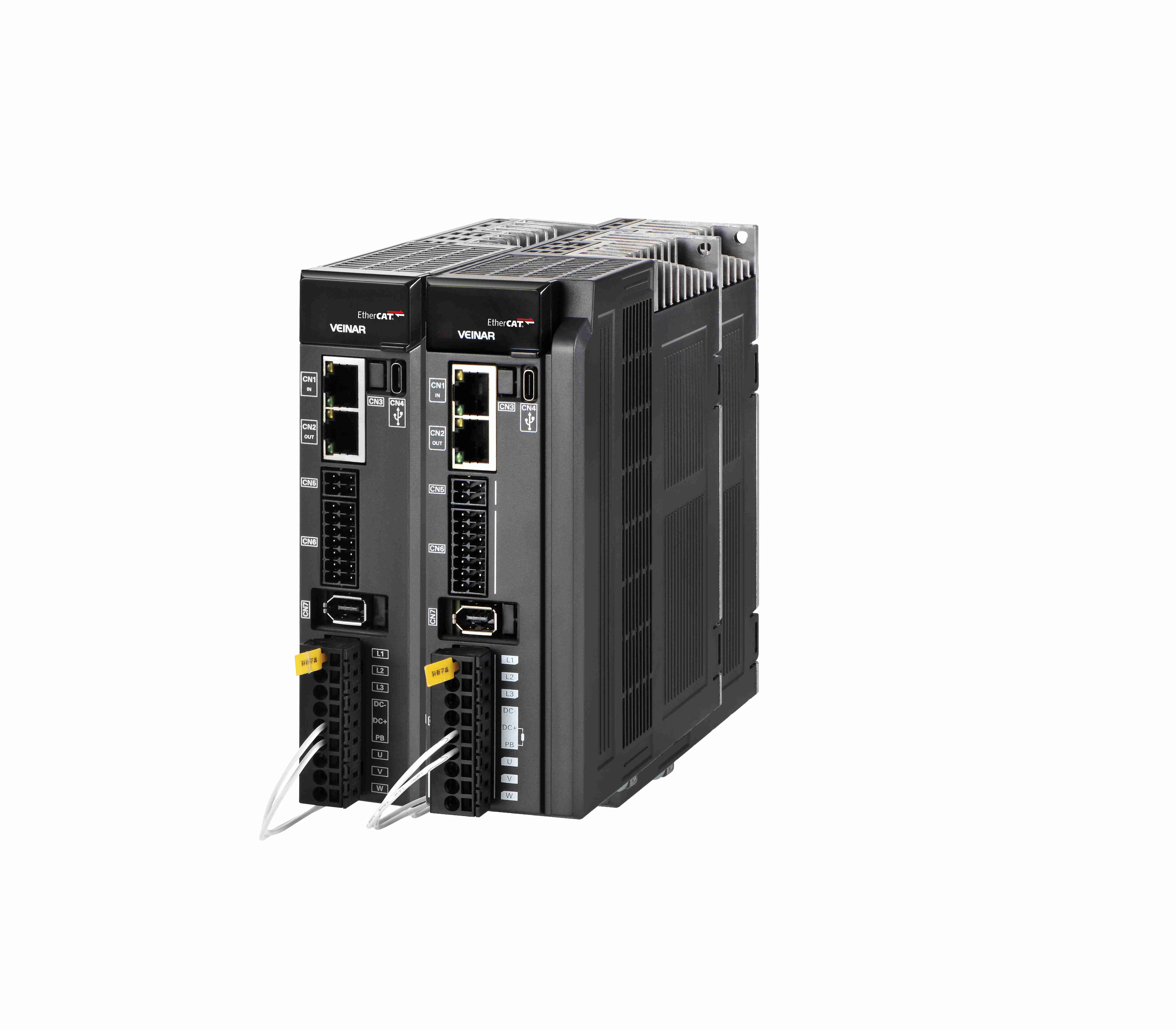
Multi-axis drive setups get rid of that bulky central motion controller and cut down on all those wires by about 70% thanks to shared power lines and EtherCAT communication throughout. When manufacturers combine three axes into one unit, they save tons of space on panels and eliminate messy cable bundles, which is huge when working in tight factory spaces where every inch counts. Getting motors synchronized directly instead of linking through multiple controllers speeds up setup time around 35%, and still keeps that super fine sub-micron accuracy intact. What's really nice about this system is how it grows with needs. Want to add more axes? Just plug in additional hardware without tearing apart entire cabinets or buying new controllers. All these factors together explain why multi-axis drives have become such a solid base for building dense 3D motion systems that need both precision and efficiency.
Lower Total Cost of Ownership for 3-Axis and Beyond: BOM, Labor, and Scalability
TCO Break-Even at 3 Axes: 18% Fewer Components and 35% Faster Commissioning vs. Single-axis CANopen
When it comes to multi-axis servo drives, the real money starts saving around three axes, which is basically where they even out compared to those old school single-axis CANopen setups. The integrated control electronics cut down on parts needed for the bill of materials by about 18%. No need for extra power supplies, controllers or all those I/O interfaces anymore. What does this mean practically? Faster setup times - we're talking roughly 35% quicker when techs work with one system instead of several separate drives and deal with half the cable mess. The more axes there are, the bigger the labor savings get, especially important in places where engineers charge top dollar. Take semiconductor testing equipment for instance. One company did a four-axis retrofit and got their investment back within just 11 months because they spent less time integrating everything and didn't have any scrapped products during installation. Multi-axis systems really change how motion systems cost out. Three axes marks the turning point, after which each additional axis brings even better savings than the last.
Energy Efficiency and Thermal Advantages in Dense 3-Axis Precision Motion Applications
Regenerative Energy Sharing Across Axes via Common DC Bus Reduces Peak Power Demand
In multi-axis servo systems, a shared DC bus acts as an energy redistribution network between different axes. When one part of the system slows down, the energy captured from that deceleration gets redirected to help power other parts that need to speed up. This kind of on-the-fly energy reuse cuts down on peak power consumption by around 15 to maybe even 20 percent, making a big difference in operations that run continuously throughout shifts, such as those found in CNC machine shops or automated packaging lines. Getting rid of those old resistor brakes saves money across several areas of plant infrastructure. Transformers don't need to be oversized anymore, circuit breakers can handle lower loads, and there's less heat generated overall. For manufacturers focused on green initiatives, this setup represents both cost savings and environmental benefits without compromising the precision required for modern automation tasks.
Measured 22% Lower Ambient Temperature Rise in Retrofit Packaging Machines Using Multi-axis Drives
Field data from packaging line retrofits shows multi-axis drives reduce ambient temperature rise near control cabinets by 22°C, compared to discrete single-axis alternatives. This thermal advantage stems from three key factors:
- Elimination of separate drive enclosures and dedicated cooling systems
- Optimized loading of power semiconductors across axes
- Reduced current harmonics through synchronized switching frequencies
Reliability studies correlate this cooler operation with 30% longer component lifespans, while the compact form factor improves airflow in robotic workcells—further enhancing thermal management in space-critical deployments.