
 EN
EN
The Dynamics of High-Speed Machining Demands
Advanced automated manufacturing facilities operate under relentless pressure to compress cycle times while elevating finished part quality. Whether fabricating intricate metal enclosures or intricate geometric profiles, production lines require continuous movement across multiple coordinated axes. In environments where consistent performance dictates operational continuity, every fraction of a second spent waiting for mechanical indexing or safety clearance checks accumulates into massive productivity losses. Senior manufacturing engineers frequently observe that conventional setups hit a physical ceiling where pushing for faster operational tempos exponentially increases the risk of catastrophic tool collisions. Bridging this gap demands an intelligent motion control strategy capable of harmonizing blistering speed with absolute positional predictability.
Engineering Bottlenecks in Conventional Tool Management
To understand why traditional manufacturing setups lag during complex operational cycles, one must examine the electromechanical constraints of legacy hardware. Standard multi-axis setups often rely on disjointed discrete controllers that introduce communication latency between the main programmable logic controller and individual drive axes. When a fabrication sequence calls for an immediate tool swap, these legacy systems suffer from deceleration lag, settling delays, and mechanical hysteresis within the tool turret assembly. Furthermore, older collision detection methods depend primarily on external limit switches or delayed current-spike monitoring, which react only after physical contact has already occurred. According to industrial automation whitepapers published by leading mechanical engineering associations, this reactive approach frequently results in damaged spindles, broken cutting media, and extended, unplanned factory downtime that drains operational budgets.
Integrating Advanced Multi-Axis Servo Control Architectures
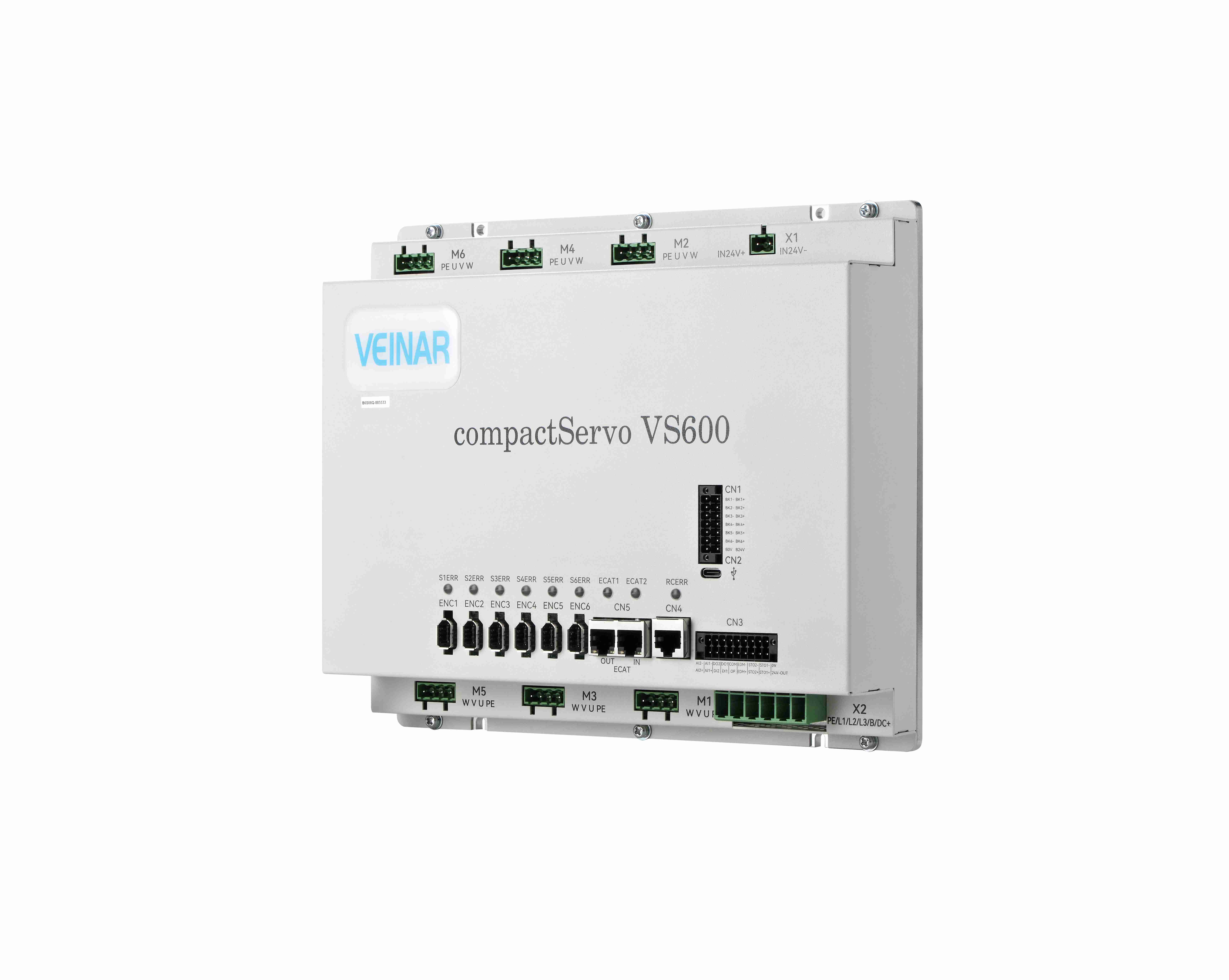
Overcoming systemic exchange latency and safety vulnerabilities requires an advanced motion foundation built on high-bandwidth, deterministic communication. Modern automated fabrication cells increasingly leverage sophisticated multi-axis servo configurations linked via high-speed real-time industrial Ethernet protocols like EtherCAT. By integrating a specialized multi-axis servo control architecture originally engineered for high-precision positioning tasks, the central processing unit maintains microsecond-level synchronization across all linear and rotary paths. High-resolution optical encoders feed continuous position and velocity telemetry directly into high-gain vector loops, empowering the system to execute aggressive acceleration and deceleration profiles without sacrificing structural stability or trajectory fidelity.
Mastering Second-Level Exchange Dynamics via Vector Optimization
Achieving lightning-fast, second-level tool exchanges requires meticulous optimization of torque distribution and mechanical settling algorithms. During a high-speed tool transition, the drive system must rapidly decelerate the rotating carousel or linear magazine, align the gripping fingers with micro-radian precision, release the active tool, and clamp the incoming assembly within a fraction of a second. Field experience from automation integration specialists confirms that utilizing predictive current feedforward loops effectively anticipates inertial loads before physical movement begins. By dynamically managing magnetic flux and torque vectoring on the fly, the drive eliminates mechanical overshoot and vibration settling time, allowing the mechanism to snap securely into position and resume heavy-duty cutting operations instantly.
Sub-Millimeter Collision Avoidance Through Real-Time Force Tracking
Preventing catastrophic collisions during high-speed multi-axis movement goes beyond traditional software boundary limits; it requires active, closed-loop force monitoring. Modern intelligent drives continuously track real-time current draw, phase angle displacement, and motor shaft torsional feedback at frequencies exceeding several kilohertz. If an unexpected obstruction or anomalous resistance profile disrupts the expected motion vector—even at a microscopic scale—the drive firmware instantly identifies the torque spike and initiates a controlled, high-torque dynamic braking sequence in less than a millisecond. This proactive intervention halts movable assemblies before impact forces can compromise expensive mechanical components or warp delicate framing elements.
Translating Motion Intelligence into Lasting Commercial Value
Integrating ultra-fast switching capabilities and intelligent collision prevention directly transforms plant-floor productivity and asset longevity. By eliminating dead time between tool switches and protecting equipment from sudden impact failures, industrial facilities achieve maximum machine utilization and drastically lower maintenance overhead. Highsense delivers mission-critical motion control solutions backed by decades of joint research and development expertise, offering robust manufacturing capabilities and reliable global supply chain services that empower industrial enterprises to scale confidently. Through continuous innovation in compact multi-axis drive architecture and engineering excellence, Highsense consistently drives automation performance forward, helping global manufacturers turn complex technical challenges into enduring competitive advantages.
Table of Contents
- The Dynamics of High-Speed Machining Demands
- Engineering Bottlenecks in Conventional Tool Management
- Integrating Advanced Multi-Axis Servo Control Architectures
- Mastering Second-Level Exchange Dynamics via Vector Optimization
- Sub-Millimeter Collision Avoidance Through Real-Time Force Tracking
- Translating Motion Intelligence into Lasting Commercial Value